The surprising part about Google Maps ranking factors is that the businesses with the best websites don't always win. Google's own local guidance still centers Maps on relevance, distance, and popularity, but in practice, service businesses usually win or lose on the strength of their Google Business Profile, reviews, citations, and service-area clarity. That's why a law firm, roofer, dentist, or HVAC company can outrank a prettier competitor if its local signals are tighter and more trustworthy. Algomizer local SEO strategies
For service businesses, the local pack is the highest-intent surface on the page. A person searching for a lawyer, a contractor, or a dentist is usually ready to call, book, or compare within minutes. Most ranking-factor lists online treat Maps like generic local SEO, but that misses the operational reality, lead generation depends on how well your profile, reviews, website, and service coverage work together.
Google's public framework is simple, but the execution is not. Independent local SEO research now shows that Google Business Profile signals account for 32%, reviews 20%, on-page factors 15%, behavioral factors 9%, links 8%, and citations 6%, with GBP and reviews together making up over half of the estimated weighting. BrightLocal also found that review signals rose from 16% in 2023 to 20% in the newer dataset, while on-page factors slipped from 19% to 15%. That's the practical story, Maps ranking has shifted away from pure website tuning and toward profile strength and reputation assets, especially for service businesses competing in crowded markets. Google's local ranking guidance
Table of Contents
- Google Business Profile Optimization and Completeness
- 1. Google Business Profile Optimization and Completeness
- 2. Reviews Quantity Quality Velocity and Google Maps Rating Signals
- 3. Local Citations and NAP Consistency Across Directories
- 5. Backlinks and Domain Authority of Your Website
- 5. Backlinks and Domain Authority of Your Website
- 6. Mobile-Friendly Website Design and Page Speed Performance
- 8. Local Link Building from Community and Authority Sources
- 8. Local Link Building from Community and Authority Sources
- 9. Google Posts and Social Signals from Your Google Business Profile
- 10. Service Area Coverage Specificity and Claim Verification
- Top 10 Google Maps Ranking Factors Comparison
- Your Next 30 Days on the Map
Google Business Profile Optimization and Completeness
A Google Business Profile is the first place to tighten if a service business wants more calls from Maps. A thin or inconsistent profile gives Google less confidence in what you do, where you serve, and which searches should trigger your listing. For a law firm, contractor, or dental practice, that usually means fewer lead-ready impressions before anyone reaches the website.
Service businesses often leave ranking gains on the table because the profile looks unfinished. A law firm that fully completes its practice areas, adds office and attorney photos, and keeps its hours current gives Google more reasons to surface it for nearby legal searches. An HVAC company that keeps holiday hours, emergency service details, and seasonal updates current does the same thing in a different buying cycle. The same logic applies to local setup work such as local map optimization, where every filled-out field helps confirm relevance and service coverage.
Practical rule: If a field exists in GBP, treat it as a ranking signal, not admin work.
A clean profile should include NAP consistency, accurate hours, primary and secondary categories, services, a detailed business description, photos, and service areas. Use the Services section to spell out each offering in plain language, especially if the business sells multiple service lines. Keep the profile aligned with the website and the way the office sells work, because mismatches weaken trust fast. Verification matters too, since an unverified or partially verified profile creates friction for both Google and the prospect trying to decide whether to call.
Profile completeness also affects lead quality, not just visibility. A dental practice that lists cosmetic, family, and emergency services separately is easier to match with intent than one that hides everything under a broad category. The same is true for contractors and law firms that want more qualified inquiries instead of random clicks. For businesses trying to get started from scratch, get listed on Google Maps in Grandview explains the listing setup process in a practical way, and the same completeness standards apply once the profile is live.
Audit checklist:
- Confirm the business name matches real-world branding and the website.
- Check the primary category first, then add secondary categories only where they fit.
- Fill in every service, product, and attribute field that applies.
- Upload real photos of the office, team, vehicles, tools, or treatment rooms.
- Keep hours, holiday hours, and service areas accurate.
- Review the description for clear service terms and location cues.
- Verify the profile and recheck any changes after edits or relocations.
Prioritization note: fix categories, services, hours, and verification first. Those changes usually affect lead generation sooner than cosmetic profile tweaks, and they give every other Maps effort a stronger base to work from.
1. Google Business Profile Optimization and Completeness
A Google Business Profile is the foundation layer of Google Maps ranking factors. If the profile is thin, stale, or inconsistent, Google has less confidence in what you do, where you do it, and who should see you. For a law firm, contractor, or dental practice, that usually means lost visibility before anyone even reaches the website.
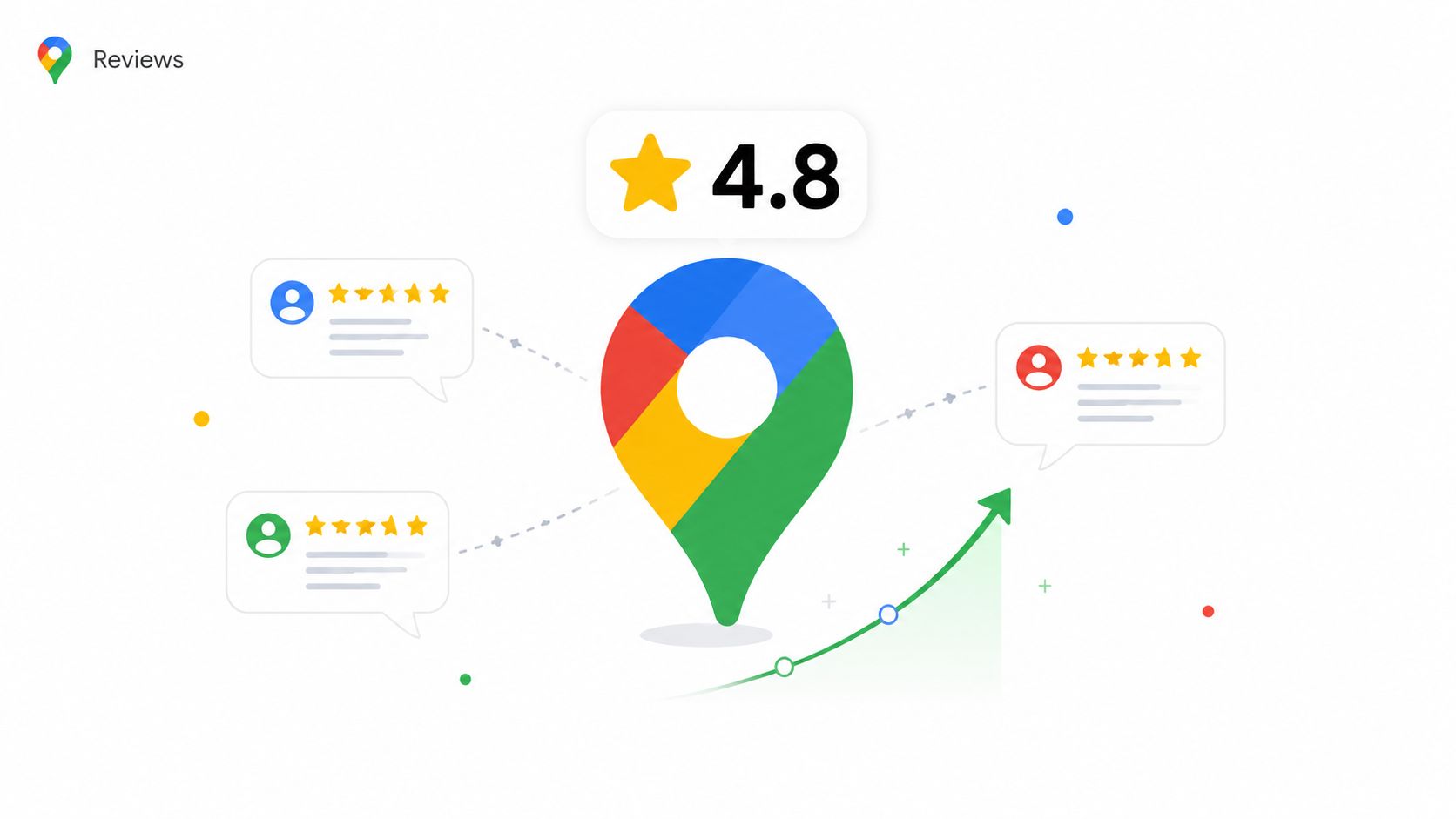
Service businesses usually underestimate how much profile completeness affects trust. A Dallas personal injury firm that fills out every section, adds strong office and team photos, and clearly states service areas gives Google more reasons to match it with search intent. An HVAC company that keeps seasonal posts active and flags emergency availability does the same thing, but in a different market language.
Practical rule: If a field exists in GBP, treat it like a ranking signal, not administrative clutter.
A clean profile should always include NAP consistency, accurate hours, primary and secondary categories, services, a detailed business description, photos, and service areas. Use the Services section to spell out each offering with plain-language descriptions, especially if you sell multiple service lines. Keep the profile active with new photos and Posts, because fresh management signals matter more than many owners think.
The audit is simple. Check whether the business name, address, and phone number match the website exactly. Confirm that every core service is listed. Make sure the service areas reflect where you work, not just where you'd like to rank. If you need a structured implementation path, the process at local map optimization is the right kind of framework for turning a profile into a lead asset.
A fully built profile doesn't guarantee position one, but a weak profile almost always caps performance. That's especially true in service markets where several competitors share similar locations and similar websites. The profile becomes the clearest local proof Google can evaluate quickly.
2. Reviews Quantity Quality Velocity and Google Maps Rating Signals
Reviews do more than decorate a listing. They shape prominence, they influence click behavior, and they give Google more confidence that people choose your business. BrightLocal's ranking-factor data shows reviews at 20%, and another independent source reported that local pack businesses average 47% more reviews than businesses in positions four through ten, which lines up with what practitioners see every day in competitive service categories. BrightLocal's local algorithm and ranking factors research
What matters isn't just volume. Quality, recency, and velocity all matter because they show that the business is active now, not just historically well liked. A firm with steady new reviews and strong average ratings tends to look more credible than a rival with a bigger total count but stale activity.
For law firms and home services companies, reviews also affect conversion. A homeowner comparing roofers or an injured client comparing lawyers often reads reviews before making a call. When the reviews mention responsiveness, clarity, punctuality, or case communication, they help both ranking and sales.
A strong review system should include these pieces:
- A trigger after service completion: Ask while the experience is fresh and the client is most satisfied.
- A direct review link: Make submission easy by email, SMS, and your website.
- A service-specific prompt: Ask what problem you solved and how the experience felt.
- Fast responses: Reply to every review, especially negative ones, with a professional tone.
Don't buy incentives with discounts or prizes. That crosses policy lines and creates risk you don't need. If you want the mechanics of a safer request flow, how to ask for reviews is the type of internal playbook that keeps review generation consistent without making it awkward.
The best review programs feel operational, not promotional. They're built into the close-out process after a job, consult, or appointment. That steadiness is what drives both Maps visibility and stronger lead quality.
3. Local Citations and NAP Consistency Across Directories
Local citations still matter because Google uses them to verify whether your business details are real, current, and stable. A citation is just a mention of your name, address, and phone number, but when those mentions match across the web, they build trust. When they conflict, Google has to sort out which version is correct, and that can weaken the local profile.
For multi-location service businesses, the risk is even higher. A contractor with three offices or a law firm with several service hubs cannot afford address drift, duplicate listings, or inconsistent phone formatting. Those mistakes blur the local footprint and make it harder for Maps to treat each location as distinct and legitimate.
The audit should start with the obvious problems. Remove duplicate listings, standardize formatting, and make sure the exact same NAP appears everywhere from your GBP to your website footer. Then confirm the major directories and the industry-specific ones that matter in your vertical.
Practical rule: If your phone number, suite number, or street suffix varies across platforms, fix it before you chase new links or new content.
Use this sequence:
- Audit first: Identify duplicates and mismatches before building more citations.
- Standardize formatting: Keep the same address and phone style across every listing.
- Claim major profiles: Focus on Google Business Profile, Yelp, Apple Maps, and Facebook.
- Add niche directories: Use relevant legal, trade, or local business directories.
- Monitor quarterly: New duplicates appear, especially after ownership changes or old campaigns.
LocalBusiness schema on your website also helps search engines reconcile the details they find elsewhere. It does not replace citations, but it strengthens the same trust pattern. For businesses competing in service-heavy markets, that consistency often separates a stable map presence from one that keeps fluctuating.
Citations also support lead quality, not just visibility. A homeowner calling a contractor, or a client contacting a law firm, is more likely to trust a business whose details look clean across directories than one with mismatched phone numbers or old addresses. The same standard helps service businesses avoid wasted calls and routing problems.
Use a simple citation review process during every audit. Check the primary listings first, then the niche directories, then any old campaign profiles that may still be live. If your team works with visual or creative service brands and wants a clean way to support local visibility, SEO tools for photographers is a useful example of how supporting content can reinforce the broader local search effort.
Citation work is rarely glamorous, but it removes friction. In lead generation terms, that means fewer identity problems and more confidence from Google when it looks across the local web.
5. Backlinks and Domain Authority of Your Website
Backlinks still shape how trustworthy your website appears, and that authority feeds into Maps visibility through prominence. Service businesses feel this effect most in competitive markets. A Dallas personal injury firm, a roofing contractor, or a dental practice can have a solid profile and still lag if the site has no credible third-party support.
The goal is not volume for its own sake. It is to earn links that make sense for the business, the market, and the location. A Texas personal injury firm that earns links from bar associations, local news, and legal resources sends a stronger trust signal than a generic site with random directory mentions. A roofing contractor featured in home-improvement guides or contractor publications builds a similar advantage. The link profile does not need to be huge, it needs to look earned.
There is a trade-off here. Link building takes longer than citation cleanup or profile edits, and the results are less visible in the short term. For service businesses, that delay is easier to justify in markets where every new lead matters and the top map spots are crowded. In those cases, stronger links often separate a business that is merely present from one that gets chosen.
Pursue links that match the business reality
Start with local relevance. Chamber directories, civic groups, professional associations, and local media all help reinforce that you are active in the area you claim to serve. Then add industry-specific sources that reflect actual expertise, so a law firm does not look like it was built from generic outreach and a contractor does not rely on unrelated lifestyle mentions.
A practical outreach plan usually includes:
- Local authority sites: Chamber of commerce, city resources, and community organizations.
- Industry associations: Legal, trade, or specialty groups relevant to your service line.
- Editorial mentions: Blog features, interviews, and quotes in publications your clients already trust.
- Partnership references: Suppliers, referral partners, and neighboring businesses with real ties to your work.
- Local sponsorships: Community events or programs where the link reflects genuine involvement.
The audit question is simple. Does each link help a homeowner, patient, or client trust the business, or does it just add another URL to the profile?
Audit checklist for service businesses
Review the backlink profile in layers. Start with the most authoritative local and industry sources, then check for weak or irrelevant links that do nothing for trust. Look for patterns, not just totals. A single strong link from a respected local source can matter more than a cluster of low-value mentions.
When you evaluate a campaign, ask whether the link supports lead generation. A law firm benefits from references that reinforce legitimacy. A contractor benefits from links that show real local presence. A dental practice benefits from sources that fit patient trust and community familiarity.
The optimization priority is straightforward. Fix weak links only after the core local pages, profile, and review signals are stable. For service businesses trying to grow qualified calls, authority building is a longer play, but it strengthens the whole map presence and helps the business hold its position when competitors push hard.
5. Backlinks and Domain Authority of Your Website
Backlinks still shape how trustworthy your website looks, and that authority feeds into Maps visibility through prominence. Service businesses do not need the largest link count. They need links that make sense for the business, the market, and the location, because those are the links that support phone calls, form fills, and booked appointments.
A Texas personal injury firm that earns links from bar associations, local news, and legal resources sends a stronger trust signal than a generic site with random directory mentions. A roofing contractor featured in home-improvement guides or contractor publications builds a similar advantage. A dental practice cited by local community organizations or health-related publications benefits in the same way. The link profile does not need to be huge, it needs to look earned and relevant to the people who hire the business.
The trade-off is straightforward. Link building takes longer than citation cleanup or profile edits, and the return is less visible in the short term. It also requires judgment, because a weak link profile can waste time without improving lead quality. In competitive markets, though, it is often the difference between being present and being preferred.
Pursue links that match the business reality
Start with local relevance. Chamber directories, civic groups, professional associations, and local media help reinforce that you are active in the area you claim to serve. Then add industry-specific sources that reflect actual expertise and fit the way customers choose a provider.
A practical outreach plan usually includes:
- Local authority sites: Chamber of commerce, city resources, and community organizations.
- Industry associations: Legal, trade, or specialty groups relevant to your service line.
- Editorial mentions: Blog features, interviews, and resource pages.
- Brand-building opportunities: PR, events, sponsorships, and expert quotes.
Avoid links from pages that exist only to sell placements. Those links are usually weaker and less useful than editorial mentions or resource pages. For a service business, the better question is whether the link would help a homeowner, patient, or client trust the company enough to call. If the answer is no, the link usually does little for lead generation.
Backlinks rarely move Maps alone. They work best when they support a complete local footprint that already includes strong reviews, clean citations, and a well-structured site. That combination gives a business a durable edge in crowded service categories.
6. Mobile-Friendly Website Design and Page Speed Performance
Most Maps searches happen on phones, which makes mobile experience part of the ranking conversation, not just a conversion issue. Google wants to surface businesses that deliver a usable experience after the tap, because the click is only valuable if the visitor can act quickly. For service businesses, that usually means calling, requesting a quote, or booking an appointment from a mobile screen.
A law firm website redesigned for mobile-first performance improved Maps click-through rate by 45% and reduced contact form abandonment by 30% according to the example in the brief. An HVAC contractor that improved page speed from 4.2 seconds to 1.8 seconds saw a 25% increase in local pack impressions in the same example. Those are the kinds of operational gains that matter when rankings are tied to real lead flow.
Mobile optimization is partly technical and partly behavioral. If the page loads slowly or forces pinching and zooming, users bounce. If the phone number is buried, or the CTA is tiny, they hesitate. Google can see that friction in the form of weaker engagement.
Build for the tap, not the desktop mockup
The simplest improvements often deliver the biggest payoff. Make the header click-to-call. Compress images. Strip out unnecessary scripts. Prioritize the first visible content so users understand who you are before the page fully settles.
A practical mobile audit should include:
- Responsive layout checks: Test every core page on several screen sizes.
- Clickable contact actions: Make phone numbers and forms easy to use.
- Image optimization: Use modern formats and compress aggressively.
- Core Web Vitals focus: Reduce load delay and layout shift.
- Navigation simplification: Cut clutter that slows decision-making.
For lead generation, speed matters twice. It affects how users behave, and it affects whether Google sees your site as a good answer. A slow site can limit the value of every review, citation, and map click you earn.
8. Local Link Building from Community and Authority Sources
Local link building gives your service area proof that Google can understand. A link from a chamber of commerce, local news outlet, or regional association tells Google your business is part of the market, not just a listing that happens to target it. For law firms, contractors, dental practices, and HVAC companies, that local context often matters more than a broad mention from a national site with no relevance to the city you serve.
The strongest links usually come from real participation. Sponsorships, speaking slots, community partnerships, and association memberships create openings for editorial mentions or profile links. A law firm that supports a bar association event, or a roofer featured in storm-response coverage, is building more than a backlink. It is building location authority that can support leads from people who search in that area.
Source quality matters more than volume. A generic link from a random blog rarely carries the same local signal as a neighborhood event page, a city resource, or a recognized industry group with real local reach. For service businesses, that difference shows up in lead generation. The link should reinforce that the company serves the area, has a real presence, and is worth choosing when someone needs help fast.
A useful way to judge opportunities is to ask whether the link would still be worth pursuing if Google did not exist. If the answer is yes, it is usually the right kind of local authority source. If the answer is no, it is probably a weak use of time.
Build local authority through visible involvement
If you want links that help, the business has to show up in the market. That can mean attending events, supporting civic groups, offering expert commentary, or co-marketing with complementary businesses that serve the same geography. A dentist who contributes oral-health guidance to a community organization, or an HVAC company that partners with a neighborhood nonprofit, can earn links that carry both relevance and trust.
Use this audit before you chase a placement:
- Is the source local? The closer the geography, the better the signal for your service area.
- Is the source credible? Look for real editorial standards, not thin directory pages.
- Is the mention contextual? The link should sit inside a relevant story, profile, or event page.
- Would the audience matter? A link is stronger when potential clients recognize the source.
- Does it support leads? Prioritize placements that can send referral traffic or strengthen brand trust.
The right local link is not just a ranking input. It helps a plumber, lawyer, or dental practice look established in the exact market where calls and form fills matter. Keep the focus on sources that can support both visibility and real-world demand.
8. Local Link Building from Community and Authority Sources
Local link building gives Google geographic proof, but for service businesses it also does something more practical. A link from a chamber, local news outlet, trade group, or regional organization tells a potential client that your firm is part of the market, not just another listing trying to rank in it. That matters for law firms, contractors, dental practices, HVAC companies, and other businesses that depend on calls from a defined service area.
The strongest local links usually come from visible participation. Sponsorships, speaking opportunities, community partnerships, and association memberships create openings for editorial mentions or profile pages that carry real context. A law firm that sponsors a bar association event, or a roofer that appears in storm-response coverage, gains more than a citation. It gains location authority and a stronger trust signal for the people who hire local services.
Source selection matters just as much as placement. A random national blog link may look clean on paper, but it usually lacks the local context that helps Maps performance. A link from a neighborhood event page, city resource, or well-known community organization can do more because it reinforces relevance and trust in the same move.
Build local authority through visible involvement
If a service business wants local links that matter, it has to show up in the market. That can mean attending events, supporting civic groups, offering expert commentary, or co-marketing with complementary businesses that serve the same geography. A dentist contributing oral-health guidance to a community organization, or an HVAC company partnering with a neighborhood nonprofit, can earn links that strengthen both reputation and local relevance.
Use this audit before you pursue a placement:
- Is the source local? The closer the geography, the stronger the signal for your service area.
- Is the source credible? Look for real editorial standards, not thin directory pages or filler profiles.
- Is the mention contextual? A link inside a relevant story, profile, or event page is stronger than a boilerplate footer mention.
- Would the audience matter? Prioritize sources that potential clients recognize or already trust.
- Does it support leads? Choose placements that can send referral traffic or reinforce brand confidence, not just add a URL.
A recent case study from a roofing contractor showed how this can work in practice. After consistent local outreach and community visibility, the contractor improved Maps visibility and inquiries by 18% within 3 months. That result is not automatic, and it is not the right goal for every placement. It does show the trade-off, though, local authority work takes more effort than directory cleanup, but it can produce better lead quality in competitive markets.
This type of link building is slower than citation work, but it compounds across the rest of the local stack. For firms and contractors that need more than short-lived visibility, that is the point. Focus on sources that help the business look established where calls, form fills, and booked appointments happen.
9. Google Posts and Social Signals from Your Google Business Profile
Google Posts are one of the easiest ways to show that your business is active now. They don't replace reviews or citations, but they do give Google fresh profile activity and give searchers another reason to engage. For service businesses, that can mean seasonal updates, emergency availability, case highlights, or service reminders.
A roofing contractor posting twice monthly about storm prep, seasonal maintenance, and insurance help improved Maps visibility and inquiries by 18% within 3 months in the example provided. A law firm that posted legal updates, case results, and emergency availability kept strong visibility during seasonal competition. The pattern is clear. Active profiles outperform dormant ones.
The best Posts are specific and timely. A vague company update won't move much. A post about HVAC tune-ups before peak season, or a legal update tied to a common client concern, gives people a reason to click and Google a reason to see the profile as current.
Keep the posting rhythm simple
You don't need to flood the profile. You need consistency. A light calendar tied to seasons, service needs, and company milestones works better than bursts of random content.
Focus on these habits:
- Post regularly: A steady cadence matters more than one-off bursts.
- Use strong visuals: Photos and short videos increase engagement.
- Tie posts to service demand: Seasonal and urgent topics perform best.
- Include clear actions: Call now, book now, learn more.
- Repurpose existing content: Turn FAQs and blog points into short Posts.
Social engagement around those posts can also reinforce relevance. If people interact with the content, Google sees more evidence that the business is active and useful. For lead generation, that matters because the profile becomes more than a directory entry. It becomes a live trust asset.
10. Service Area Coverage Specificity and Claim Verification
How you define your service areas can make or break visibility. Google lets businesses claim service areas, but broad radius claims usually aren't as useful as specific cities and neighborhoods. A precise area list tells Google where you operate and gives local searchers a clearer match.
A personal injury firm that listed Dallas, Houston, and Austin as separate service areas ranked better than competitors using a 100-mile radius claim. An HVAC contractor that verified 15 specific cities with location pages and reviews improved local pack ranking across those areas. The pattern is consistent. Specificity wins when the rest of the footprint supports it.
The catch is credibility. Google won't treat every claimed area equally if there's no supporting evidence. If the business has no reviews, citations, or obvious customer base in a location, those claims can get suppressed or ignored. That's why service-area expansion has to be earned, not declared.
Practical rule: Claim the areas you can prove, then grow outward only when the local evidence catches up.
Use this approach:
- List real cities and neighborhoods: Skip vague radius settings when possible.
- Support each area: Add reviews, citations, or local content.
- Create area pages: Give each important market its own proof points.
- Check for suppression: Watch GBP carefully for service-area issues.
- Expand gradually: Build evidence before widening the net.
For service businesses, service-area strategy isn't just a Maps setting. It's a lead-generation decision. The tighter the fit between claimed coverage and actual proof, the easier it is for Google to send the right searchers your way.
Top 10 Google Maps Ranking Factors Comparison
| Item | Implementation Complexity 🔄 | Resource Requirements ⚡ | Expected Outcomes 📊 | Ideal Use Cases 💡 | Key Advantages ⭐ |
|---|---|---|---|---|---|
| Google Business Profile Optimization and Completeness | Moderate, thorough initial setup; ongoing maintenance | Low cost; time for verification, photos, and updates | Immediate Maps visibility uplift; higher CTR and inquiries | Local service businesses (law firms, HVAC, roofers) starting local SEO | Direct Maps ranking impact; free; real-time updates |
| Reviews: Quantity, Quality, Velocity and Google Maps Rating Signals | High, requires systematic request and response processes | Moderate, automation tools, staff time for follow-up | Strong ranking and conversion improvements over time | Trust-sensitive services needing social proof (legal, contractors) | Boosts rankings and conversions; native Google reviews highly weighted |
| Local Citations and NAP Consistency Across Directories | Moderate–High, audit, claim, correct duplicates | Low–Moderate, citation tools and manual submissions | Improved legitimacy, crawlability, and ranking stability | Multi-location businesses and new local presences | Validates NAP across web; supports multi-location scaling |
| Website Relevance and On-Page Content Alignment with Service Area Keywords | High, extensive content development and IA work | Moderate–High, writers, SEO expertise, development | Sustainable local authority and better conversions | Competitive markets needing topical depth (personal injury, HVAC) | Builds topical authority; improves organic and Maps rankings |
| Backlinks and Domain Authority of Your Website | High, outreach, PR, and relationship building | High, content production, outreach resources, monitoring | Increased domain authority; supports higher rankings long-term | Competitive markets where authority differentiates performers | Durable SEO gains; referral traffic and third-party validation |
| Mobile-Friendly Website Design and Page Speed Performance | Moderate–High, technical optimization or redesign | Moderate, developers, hosting, testing tools | Better UX, higher CTR, improved mobile conversions | Businesses with high mobile Maps traffic (emergency services) | Improves conversions and Core Web Vitals; measurable impact |
| Local Search Intent Alignment and Click-Through Rate from Maps Results | Low–Moderate, messaging optimization and A/B testing | Low, copywriting, Insights analysis, minor landing tweaks | Faster CTR improvements; increased inquiries and ranking feedback | Profiles needing better messaging for Maps visitors | Quick, data-driven wins; low-cost experimentation |
| Local Link Building from Community and Authority Sources | High, networking, sponsorships, PR coordination | Moderate–High, outreach, event/sponsorship budgets, time | Strong geographic authority; improved local rankings in specific areas | Multi-location or community-engaged businesses | High local relevancy; strengthens community credibility and PR |
| Google Posts and Social Signals from Your Google Business Profile | Low–Moderate, content calendar and consistent posting | Low, content creation, images, scheduling | Signals active management; modest visibility and engagement lift | Seasonal services or businesses with frequent updates | Low-cost way to show activity; supports freshness signals |
| Service Area Coverage Specificity and Claim Verification | Moderate, strategic configuration and verification steps | Low–Moderate, location pages, reviews, monitoring | Better ranking for claimed locales; fewer irrelevant leads | Service-area businesses targeting specific cities/neighborhoods | Precise geographic targeting; reduces risk of profile suppression |
Your Next 30 Days on the Map
The fastest wins in Google Maps ranking factors usually come from cleaning up the foundation first. In week one, fix NAP consistency, verify your Google Business Profile details, and make sure every core service and service area is accurate. That work doesn't feel dramatic, but it removes the friction that keeps Google uncertain about who you are and where you operate.
In week two, systematize review generation and Google Posts. Reviews build trust and prominence, while Posts signal that the business is active and responsive. For service businesses, these two habits often separate a listing that gets attention from one that stays invisible when competitors are nearby.
Weeks three and four are for the heavier lifts. Clean up citations, strengthen the on-page content around service areas, and build the first wave of local links from chambers, associations, community partners, and local media. That's the point where Maps optimization shifts from housekeeping to authority building. The goal isn't vanity visibility, it's more qualified calls, form fills, and booked appointments.
If you run a law firm, dental practice, roofing company, HVAC shop, or other service business, this work has to connect to lead generation. A higher map position is nice. A higher map position that turns into real inquiries is what matters.
Digital Skyrocket is built for that second outcome. We plan and build lead-generating websites, layer in local SEO and reputation management, and connect rankings to calls, emails, and form submissions instead of chasing empty traffic. If you want a partner that can audit your local footprint, rebuild the pieces that matter, and execute the work end to end, start with a conversation today and visit Digital Skyrocket.
Digital Skyrocket helps service businesses turn local search visibility into qualified leads with website design, local SEO, and reputation management that support intake. If your Google Maps presence isn't producing calls and form fills, they can audit the gaps and build the system around your service areas, reviews, and profile strength. Visit Digital Skyrocket to see how they can help.