You've got a business that should be showing up when someone nearby needs help right now, but the map pack keeps handing that call to somebody else. A roofer on a jobsite, a dentist with open chairs, a law firm that wants more signed cases, all run into the same problem, the listing is live, the website looks fine, yet the phone still doesn't ring from Maps.
That gap matters because local visibility isn't just about being seen. Semrush reports that businesses in the local map pack get 126% more traffic and 93% more calls, website clicks, and requests for directions than businesses ranked 4 through 10 in the same local results set, and 58% of businesses don't optimize for local search while only 30% have a local SEO plan in place (Semrush local SEO statistics). In a market where 46% of all Google searches have local intent and local “near me” searches are massive in volume, the businesses that treat Maps like a conversion channel, not a directory listing, pull ahead faster (SOCi local SEO data referenced in 2024).
For a useful local marketing perspective that translates well to service businesses, the notes in RealEstateCRM local marketing insights are worth a look because they connect visibility with lead flow instead of vanity reach.
Table of Contents
- Why Local Map Optimization Matters Now More Than Ever
- Google Business Profile Setup and Optimization That Actually Works
- On-Site Local SEO and AEO Foundations for Map Rankings
- Building Citations and Local Links That Move Rankings
- Review Strategy and Reputation Management for Map Visibility
- Technical Signals, Tracking, and Converting Map Traffic
- Putting It All Together Your Local Map Optimization Action Plan
Why Local Map Optimization Matters Now More Than Ever
A roofing owner in East Texas can be standing on a ladder, type roof repair near me, and watch a competitor take the call before lunch. That is a visibility problem tied to local map optimization, and it usually starts with weak signals across the business profile, website, reviews, and location pages.
Maps now sit inside the decision process itself. Service-area businesses are being judged by what Google can verify, by what users can quickly trust, and by what AI systems can summarize from the web. The businesses that show consistent information, clear service coverage, and enough supporting content tend to surface more often in Maps and in AI-assisted results, while thin listings get passed over.
A lot of owners still stop at the profile and leave the rest untouched. That leaves money on the table because Google is not reading the listing in isolation. It is comparing the profile against the website, local references, review language, and the wider signals around the brand, including what shows up in answer engines and search summaries.
This shift matters most for service businesses that depend on calls and booked estimates. A law firm, dentist, or roofer can have a decent profile and still lose visibility if the site does not back it up with location relevance, service detail, and answers that match how people search. For a useful example of how adjacent local demand is being framed, see RealEstateCRM local marketing insights, which reflects the same practical pressure to show up where buyers are already looking.
The trade-off is simple. Quick profile edits can help, but they do not hold up if the website, citations, and reputation signals stay weak. Businesses that treat Maps as part of a larger visibility system usually keep their rankings longer, because they give Google and AI tools more evidence to work with when customers search by service, location, and intent.
Google Business Profile Setup and Optimization That Actually Works
Your Google Business Profile is the front door for local discovery, but most businesses still treat it like a one-time form submission. That misses the point. The profile should be managed like an active sales asset, because the details inside it shape how Google understands your business and how users decide whether to call.
Start with completeness, then move to precision
Category choice matters first. If the category is too broad, Google has less confidence in what you do. If the service areas, hours, description, and contact details are inconsistent, the profile sends mixed signals that weaken relevance and trust.
The latest survey data in the brief puts GBP signals at 32% of local pack ranking factors, which makes it the heaviest single cluster in the mix. Reviews come next at 20%, then on-page signals at 15%, behavioral signals at 9%, links at 8%, citations at 6%, and personalization at 6%. Those weights are a reminder that profile work is still the most impactful task, but it's not the only one that matters.
| Google Business Profile Ranking Factor Weights (2026) | Weight |
|---|---|
| Google Business Profile signals | 32% |
| Reviews | 20% |
| On-page signals | 15% |
| Behavioral signals | 9% |
| Links | 8% |
| Citations | 6% |
| Personalization | 6% |
A detail many owners get wrong is the address decision. Recent research across 8,000 businesses in 200 cities found a negative correlation between service-area-only setup and ranking performance, and the study stated that not having an address on the listing is worse for ranking (Advice Local ranking factors study). That doesn't mean every company should publish a storefront address. It does mean hiding the location entirely can cost visibility in competitive markets.
Keep the profile alive, not stale
Fresh photos, regular updates, and review activity matter because they show the listing is active. If you're in a visual category, virtual tours for Florida listings are a good reference point for how imagery can support trust before the first call.
Practical rule: if the profile hasn't changed in months, Google and your prospects both read it as neglected.
For businesses that need to change a listed address, the operational steps are worth handling carefully, and this internal guide on how to change a Google address is the kind of reference that prevents avoidable mistakes. The job isn't to stuff the profile with keywords, it's to make every field reinforce the same clear local identity.
On-Site Local SEO and AEO Foundations for Map Rankings
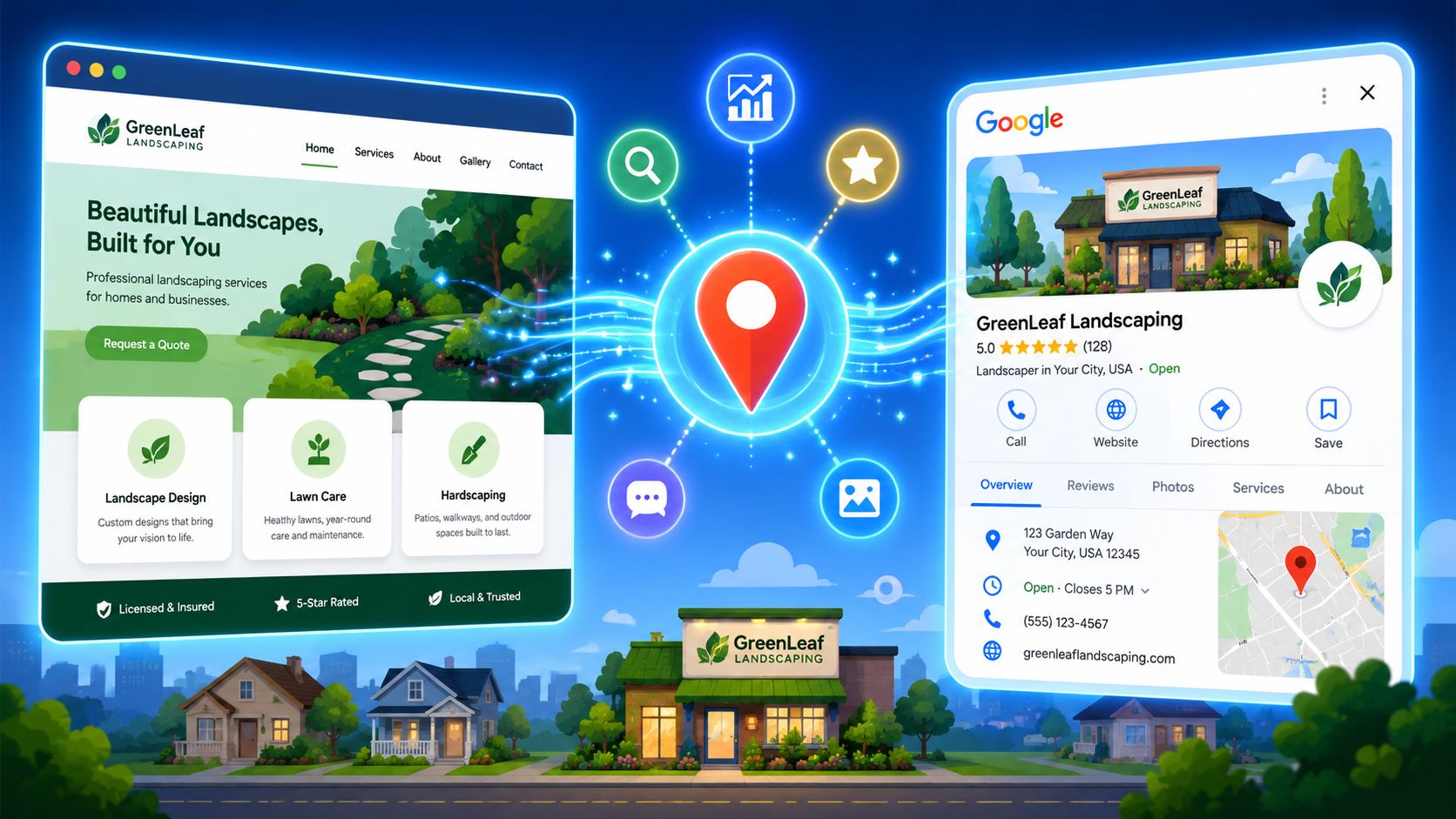
A strong map presence usually starts on the website. The profile can attract attention, but the site has to back up what the business claims, especially for service-area companies that depend on local intent rather than foot traffic. If a roofer, dentist, or law firm says it serves a city but the site barely mentions the service line, the area, or the problems it solves, the map listing has less to work with.
Build pages that mirror real search intent
Generic service pages rarely do much for local visibility. A stronger setup uses separate pages for each major service, then layers in location language, neighborhood references, and the specific concerns buyers already have. A roofer should not rely on one thin “services” page. A dentist should not bury emergency care, implants, and cosmetic work under one vague heading.
A clean structure usually includes a few clear pieces:
- Service pages by intent: one page for each core offering, written around the actual query people type.
- Location cues that feel natural: neighborhoods, landmarks, nearby cities, and defined service boundaries.
- Answer-first copy: short sections that respond directly to who, what, where, and how questions.
- Schema markup: LocalBusiness, Service, and contact data that help search engines parse the page.
AEO, answer engine optimization, matters here because search systems are trying to pull direct answers, not just rank pages. If the site can answer common local questions in plain language, it supports organic visibility and the map profile that sits above it. That matters even more for service-area businesses, where the website often carries more of the relevance burden than the listing itself.
Use content that does more than repeat the city name
A lot of brochure sites still treat local pages like template swaps. The city name changes, the body copy barely does, and the page ends up looking like filler. That does not help searchers, and it does not give Google much confidence that the business understands the service area, the job type, or the objections that come up before a call.
The better approach is to write for the questions people ask at the moment they are comparing providers. For broader guidance on page-level local signals, the collection of local SEO insights from EmailScout is a useful reference point. The goal is consistency, not volume. A useful site says the same thing in a sharper way on every important page, so the profile, the page, and the query all line up.
Reviews and reputation also feed this picture. If a business is getting reviews but they are not appearing where they should, this guide on why Google reviews are not showing up is the kind of operational check that saves time. When the site, the profile, and the review flow all support the same local story, map visibility has a much better chance of holding.
Building Citations and Local Links That Move Rankings
Citations and local links do different jobs, but they support the same signal, that your business is active, established, and connected to the area it serves. Citations are online mentions of your business details. Local links are clickable references from nearby or relevant websites that point back to you. Both help build the kind of local prominence search engines look for, but they do it in different ways.
Clean consistency beats scattered visibility
The first pass should always focus on the core directories. If your name, address, and phone number drift across listings, Google has to sort through conflicting versions of the same business. That creates doubt, especially in crowded categories like roofing, dental, and law.
Directory cleanup should come before outreach. Start with the major directories, then move into industry-specific listings and trusted local sources. If the business name appears in slightly different forms across a few platforms, standardize it. If the address format changes from one listing to another, fix that too. If the phone number is outdated, correct it immediately.
The practical side of this work is tedious, but it is the part that prevents avoidable problems later. A clean citation profile gives every other local signal a better chance to hold.
For a useful reference point on the listing side, this local citation building guide keeps the focus on consistency instead of random mention chasing.
Local links work best when they reflect real relationships
The strongest local links usually come from actual activity. Chamber membership, sponsorships, partner mentions, local event pages, supplier relationships, and neighborhood associations all fit the same pattern. They show that your business is part of the local network, not just a site sitting outside it.
A local link from a relevant community site can be more useful than a weak, irrelevant link from a bigger domain.
The 2026 survey data in the brief puts links at 8% and citations at 6% of local pack factors. Those weights are smaller than GBP signals or reviews, but they still matter because they support the broader trust picture. In practice, citation cleanup and local link acquisition work best together, because one fixes identity and the other reinforces it.
A lot of businesses stop after directory cleanup. That leaves value on the table. Citations remove confusion. Local links add credibility. Together, they make the profile look like a business Google can recommend with more confidence.
Review Strategy and Reputation Management for Map Visibility
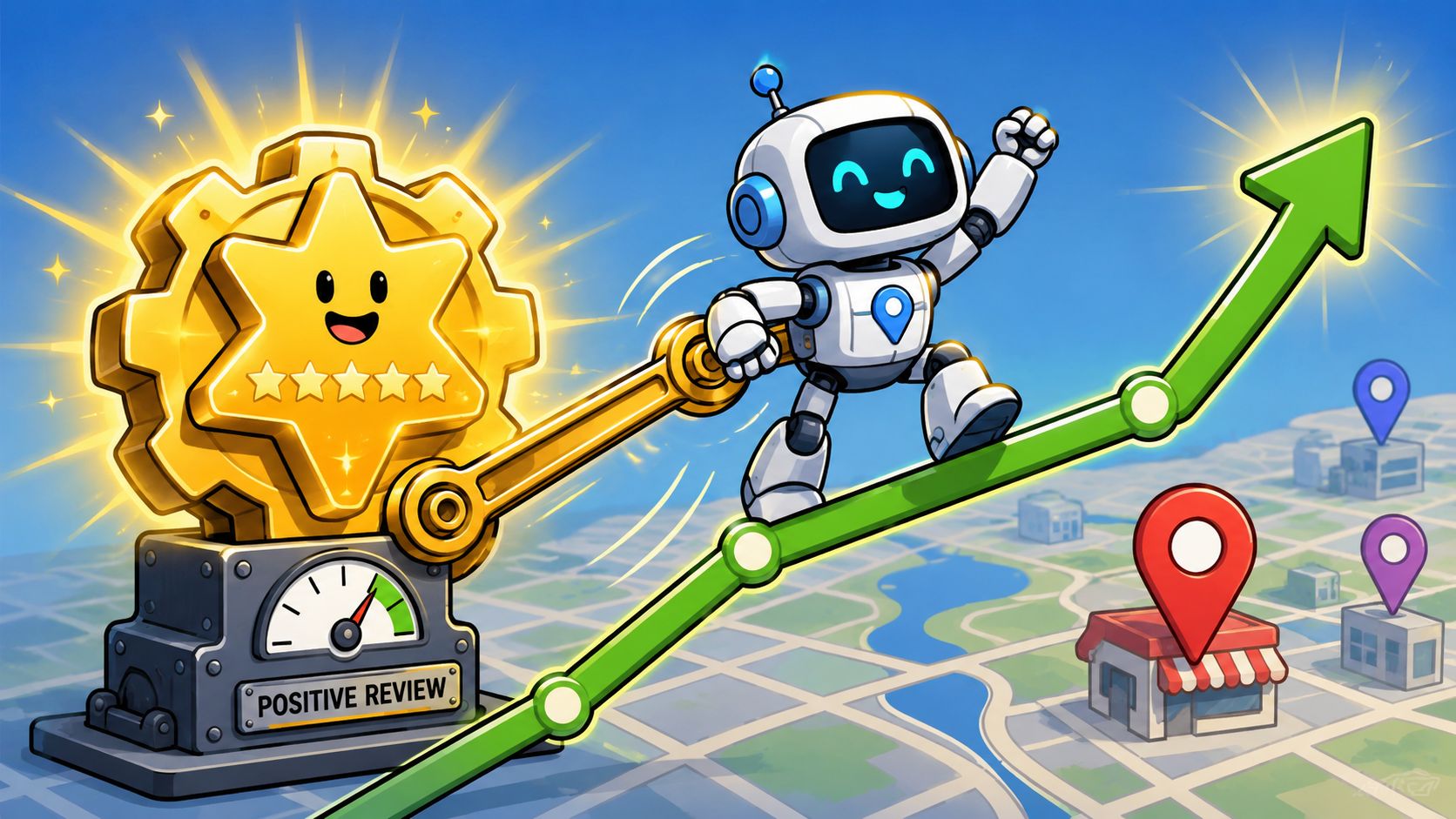
A roofer with solid jobs, a dentist with happy patients, or a law firm with strong case outcomes can still lose map visibility if reviews look thin, stale, or generic. In local search, reviews do more than reassure prospects, they shape whether the listing looks active enough to earn attention. The 2026 survey data in the brief puts reviews at 20% of local pack ranking factors, which makes them one of the largest signal groups behind Google Business Profile itself. In practice, that means recent feedback, steady response behavior, and review text that sounds like a real customer wrote it.
Build the request into the service process
The easiest review systems do not rely on memory. They attach the request to a natural moment in the customer journey, usually after the job is finished, the issue is resolved, or the client has said they are happy. That timing matters because a satisfied customer is much more likely to respond while the experience is still fresh.
A strong process usually includes:
- A clear ask at the right moment: send the request when the work is complete and the customer is satisfied.
- A direct path: one link, one action, no confusion.
- A response habit: reply to every review with something specific about the job or visit.
- A quality check: encourage detailed comments, not just stars.
Google's own profile guidance points to relevance, distance, and prominence as the main local ranking inputs. Reviews feed prominence in a visible way, but the true value comes from how they look over time. Recent activity, varied wording, and a steady pace of new feedback carry more weight than a burst of rushed comments that all sound the same.
Responding is part of the ranking work
A lot of businesses still treat review responses like customer service only. They are customer service, and they also show that the business is active and paying attention. A short, specific reply tells a prospect the owner is involved. A thoughtful response to a negative review shows how problems get handled when they happen.
For businesses dealing with missing or delayed Google reviews, this guide on Google reviews not showing up is a helpful operational reference. The broader point is simple, a flat review profile looks weaker than a living one. Fresh reviews help, and so does the way the business responds to them.
Practical rule: do not chase volume at the expense of authenticity. A steady review habit beats a burst of rushed feedback every time.
Technical Signals, Tracking, and Converting Map Traffic
A lot of local SEO reporting ends when the listing climbs. That's too early. Rankings only matter if the traffic turns into calls, bookings, and form fills, and the technical setup on the website determines whether those visitors convert once they land.
Make the site easier for search engines and people
Schema markup helps search engines read your business details in a structured way. LocalBusiness, Service, and Review schema are the usual starting points because they reinforce who you are, what you offer, and how customers evaluate you. Geotagging images can also add another geographic cue when done consistently across the site and profile.
That technical layer matters most when the business has more than one location or multiple service lines. It keeps the identity clean and the page structure easier to parse. But schema alone won't save a weak site. If the page loads slowly, buries the phone number, or forces mobile users to hunt for the contact form, the map traffic leaks away.
Track the actions that actually pay the bills
Rank position is a useful signal, but it's not the business outcome. The metrics are the calls, direction requests, website clicks, and form submissions tied to the map listing. Those are the actions that tell you whether the visibility is converting.
A practical setup should include:
- Click-to-call measurement so you can see which listings and pages drive real calls.
- Direction request tracking for businesses where visits matter.
- Form conversion tracking for service firms that close by estimate or consultation.
- Mobile-first layout checks so the user doesn't bounce before contacting you.
A clean landing page should make the next step obvious. Big tap targets, a visible phone number, concise trust signals, and a short form are usually enough. If the page is cluttered, slow, or vague, the local pack traffic doesn't become pipeline.
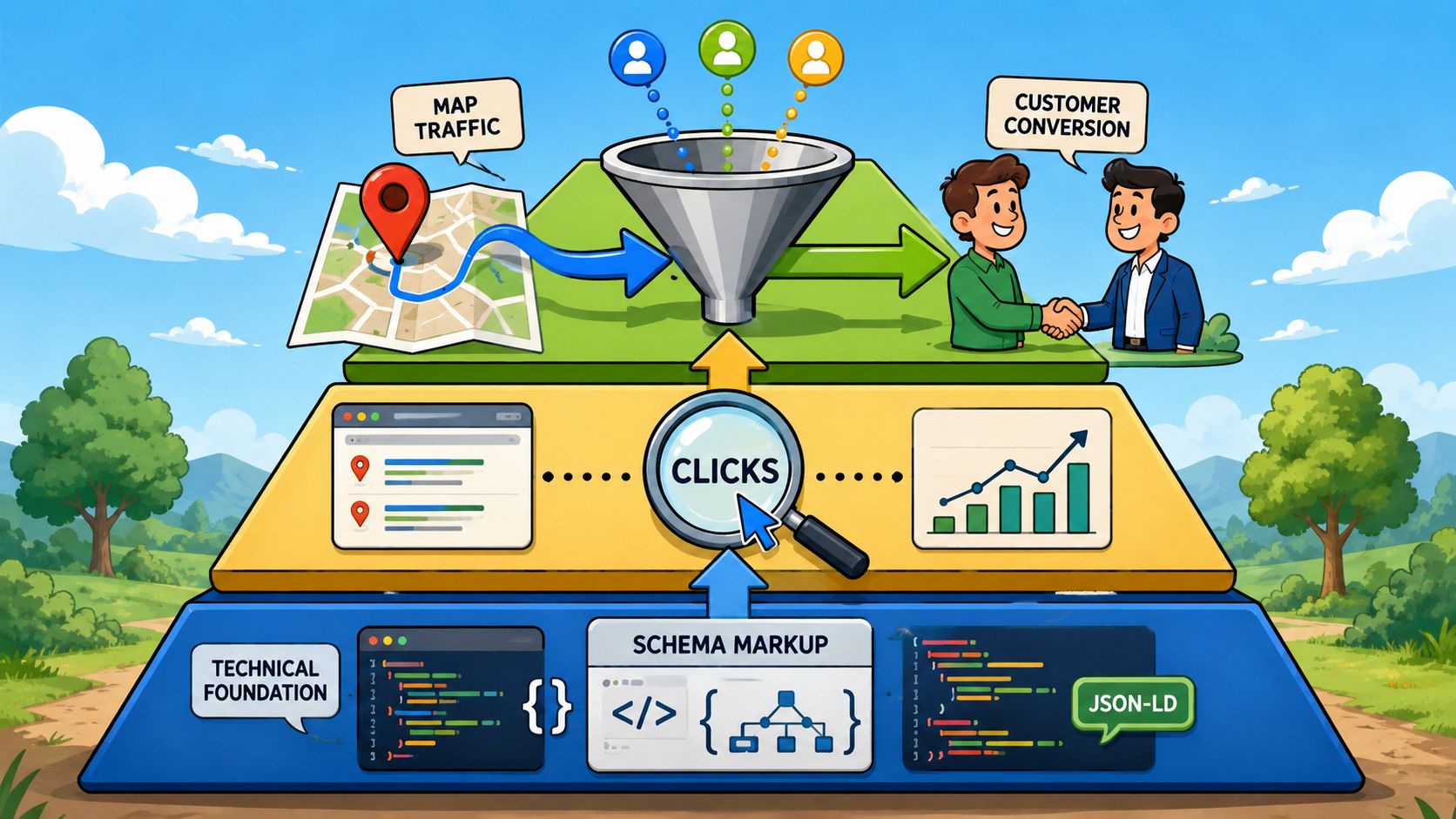
Digital Skyrocket is one option for service businesses that want website design, local SEO, AEO, and conversion-focused implementation managed together, rather than as separate vendor tasks. That combination matters because Maps performance and on-site conversion should be connected from the start, not patched together later.
Putting It All Together Your Local Map Optimization Action Plan
Local map optimization works best when each part reinforces the others. The Google Business Profile tells Google who you are and where you serve. The website proves relevance for the query and the service area. Citations and local links support prominence. Reviews create public trust. Tracking shows whether the visibility turns into calls, direction requests, and form fills.
A practical action plan starts with the basics and keeps them consistent. Keep the profile complete and current, build service and location pages that match real search intent, clean up citation inconsistencies, and earn reviews through a repeatable process rather than waiting for them to happen. Then tie all of that to call tracking, form tracking, and direction-request reporting so the work is judged by leads, not by vanity position checks.
The ranking picture has also changed. AI-assisted search and stronger on-page signals now affect whether a service-area business shows up and earns clicks, so maps work can't sit on the profile alone. As noted earlier, Semrush local SEO statistics showed how the top pack pulls a disproportionate share of attention, but the practical takeaway is simpler. Businesses that keep their map presence, site content, and reputation signals aligned tend to hold visibility longer and convert more of it into real inquiries.
Use this order, then keep refining it:
- Fix the Google Business Profile first. Make sure the name, categories, service areas, photos, and description match the business as it operates.
- Build or clean the local pages that support the profile. Each page should answer the searcher's question quickly and make the next step obvious.
- Remove citation mismatches. Small inconsistencies in names, addresses, or phone numbers still create friction.
- Put review generation on a schedule. Ask at the right time, respond to everything, and keep the tone human.
- Track what turns into revenue. Calls, directions, and form submissions matter more than where the listing sits for one keyword on one day.
- Review the page experience on mobile. If the landing page slows people down or buries the contact option, the map traffic leaks away.
That is the action plan. Map visibility is not a one-time setup, and it is not just a review request process. It is a system that only works when the profile, site, citations, reviews, and measurement all point in the same direction. Digital Skyrocket is one option for service businesses that want website design, local SEO, AEO, and conversion-focused implementation handled together instead of patched together later.