You're probably in one of these situations right now.
Your website looks respectable, but it doesn't produce enough calls. You show up for some keywords, but the people landing on the site aren't the ones ready to hire. A competitor with a weaker reputation keeps appearing in the map results, the local pack, and now in AI-generated answers too. Meanwhile, every marketing conversation seems to end with more tools, more vendors, and less clarity.
That's the core problem with most marketing for service companies. It gets treated like a pile of disconnected tasks instead of a lead-generation system. One person tweaks title tags. Another posts occasional updates. Someone else redesigns the homepage. None of it ties cleanly to qualified inquiries, booked jobs, or signed cases.
For service businesses, the highest-ROI foundation is usually simpler than owners expect. A site built to convert. Local SEO that matches how people search. A reputation system that turns good work into visible trust. Then, on top of that, a way to track what's creating revenue instead of just activity.
Table of Contents
- Why Your Service Business Marketing Isnt Working
- Start with Strategy Not Tactics
- Build Your Digital Service Hub
- Dominate Local Search and Answer Engines
- Build Unshakeable Trust with Reputation Management
- Industry-Specific Marketing Examples
- Your Service Marketing Intake Checklist
Why Your Service Business Marketing Isnt Working
A lot of owners are doing what seems reasonable. They hire someone to build a better-looking site. They ask for SEO. They post a few updates. They may even get more traffic. But the phone still isn't ringing the way it should.
That happens because the work isn't connected. The website isn't built around intent. The SEO targets broad phrases instead of buyer-ready searches. Reviews sit on Google instead of being used across the site. Nobody can say which pages influence real revenue. So the business keeps spending, but it can't tell what's pulling its weight.
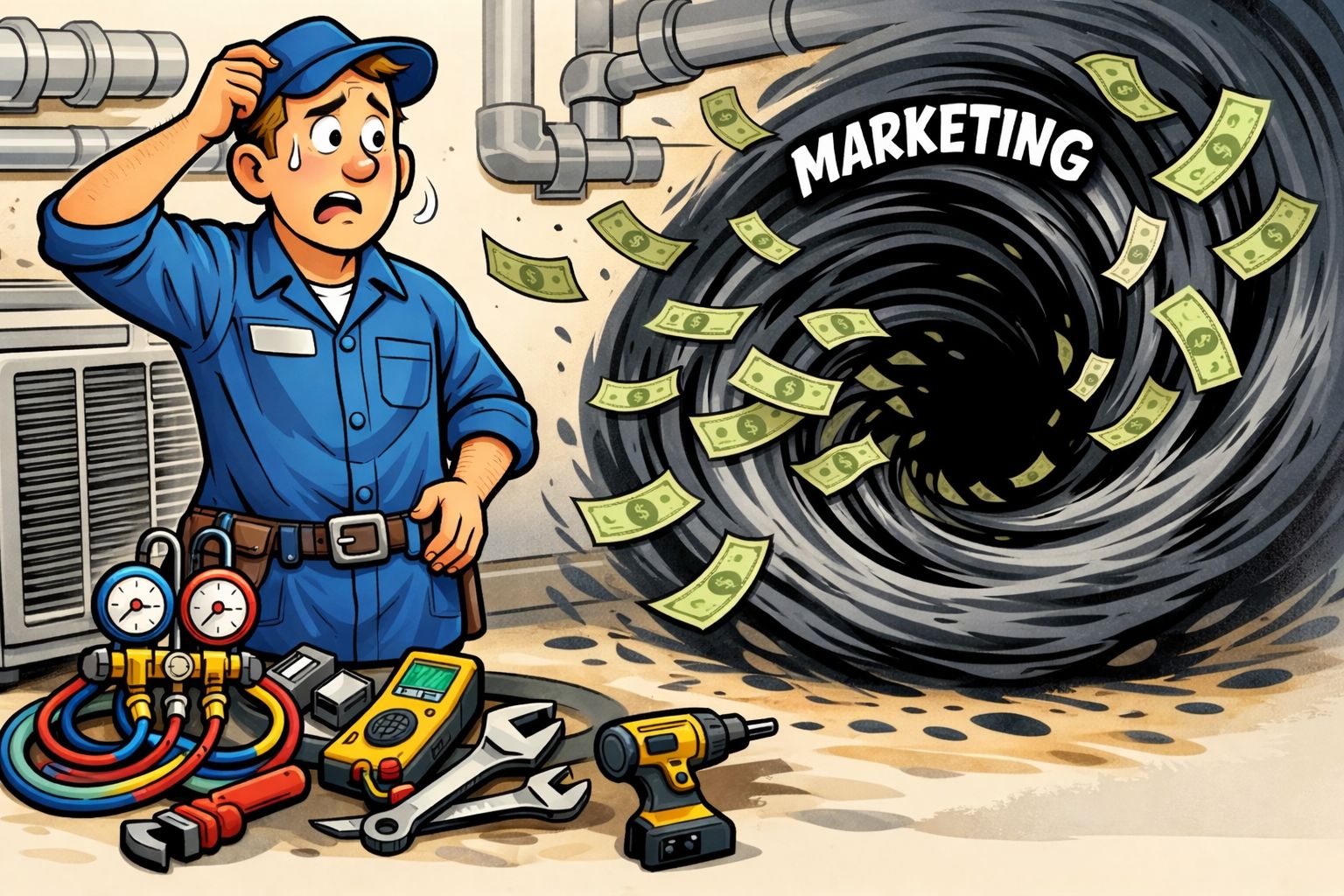
The common pattern behind weak results
A personal injury firm might rank for educational blog terms while missing searches tied to hiring intent. A roofer might have a single “Services” page trying to cover repairs, replacement, storm damage, and inspections in every town it serves. An HVAC company might get traffic from mobile users, then lose them because the site is slow, cluttered, and hard to call from.
Practical rule: If your website, local visibility, and reputation system aren't working together, your marketing will feel expensive even when parts of it are technically “working.”
Another issue is follow-up. Service businesses often lose leads after they're generated because intake is slow or inconsistent. If you're tightening operations around forms, lead routing, and reminders, this guide on small business marketing automation is a useful companion. Not because automation fixes bad strategy, but because it supports a good one.
What actually fixes it
The businesses that win usually do three things well:
- They build around buyer intent. Their service and location pages answer the practical questions a prospect has before making contact.
- They remove friction. Mobile visitors can call, submit a form, or confirm trust quickly.
- They track outcomes. They don't stop at rankings or form fills. They connect leads back to pages, search themes, and service areas.
That's the shift. Stop treating marketing for service companies like a list of chores. Build a system that produces qualified demand and shows you where revenue comes from.
Start with Strategy Not Tactics
Most weak campaigns start with a tactic. “We need SEO.” “We need a new website.” “We should post more.” None of those are strategies. They're tools. If you start there, you usually end up buying activity instead of building a pipeline.
A better starting point is brutally practical. What kind of lead do you want, from where, for which service, and what happens after it comes in?
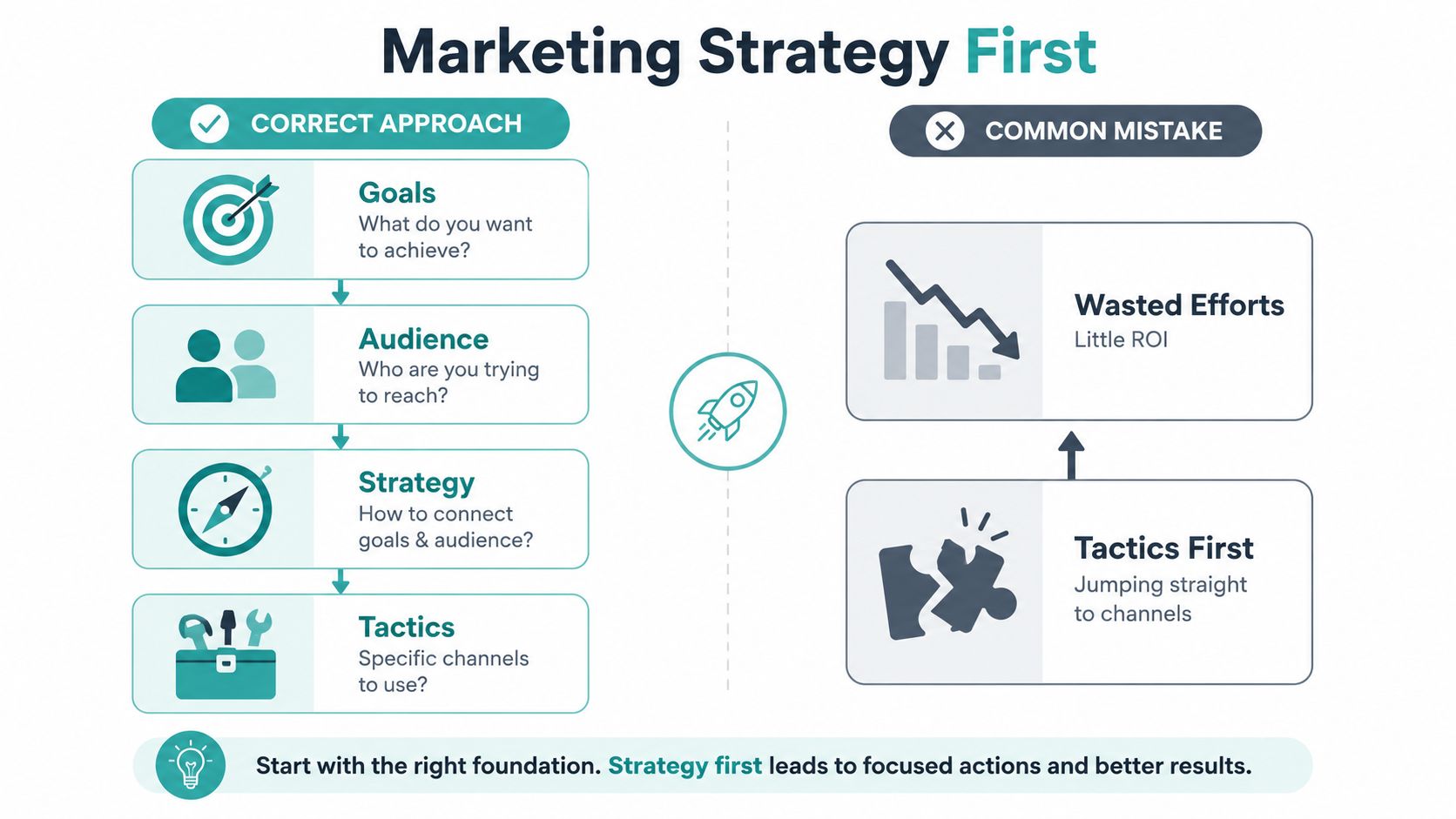
Define the business outcome first
“More cases” is too vague for a law firm. “More jobs” is too vague for a contractor. Strategy gets sharper when the target gets narrower.
A better objective sounds like this: generate qualified personal injury inquiries from one primary service area, and make sure intake can identify which case types are worth immediate follow-up. That changes everything downstream. It affects page structure, messaging, calls to action, review collection, local page coverage, and intake design.
Use a simple decision filter:
| Question | Weak answer | Strong answer |
|---|---|---|
| What are we trying to grow? | More leads | More qualified leads for specific services |
| Where do we want them from? | Everywhere | Named cities, counties, or regions |
| Who do we not want? | Anyone is fine | Poor-fit leads are filtered out early |
| What proves success? | Traffic | Booked jobs, consultations, signed cases |
Know who you actually want
Good strategy usually gets better when you exclude people.
If you're a personal injury firm, you may want motor vehicle cases in a defined market, not every practice area under the sun. If you're a roofer, you may want replacement and storm restoration, not small repair jobs in far-out service areas that drain crew time. If you're an HVAC contractor, you may want emergency repair and maintenance memberships, not low-margin one-off visits from outside your coverage zone.
That's where referrals matter too. Service-based businesses rely heavily on word-of-mouth: 72% report that referrals are their primary source of new customers, which is why local visibility, reviews, and trust elements on the website matter so much in service categories like law, roofing, dental, and HVAC, according to these service business marketing statistics.
Strategy gets easier when you stop asking how to reach more people and start asking how to attract the right people faster.
A useful strategic snapshot fits on one page:
- Ideal client profile with service need, urgency level, geography, and common objections
- Highest-value services ranked by profitability, close rate, or operational fit
- Trust triggers such as reviews, case outcomes, awards, certifications, financing, or response speed
- Primary conversion paths like calls, consultation forms, or request-an-estimate flows
That document should guide every tactical decision afterward. Without it, marketing for service companies turns into guessing with nicer graphics.
Build Your Digital Service Hub
Your website isn't a brochure. It's your intake desk, your sales script, your trust layer, and your local relevance engine in one place. If it only looks polished but doesn't move visitors toward contact, it's underperforming.
That's especially true on mobile. For local service businesses, people often arrive with urgency. They want to know if you handle their problem, serve their area, and feel credible enough to contact.
Your website has one primary job
The primary job is conversion. Not animation. Not clever copy. Not abstract branding language.
A strong service website does a few things immediately:
- Shows relevance fast. The headline tells visitors what you do, who you help, and where.
- Makes contact easy. Call buttons, short forms, and visible next steps reduce hesitation.
- Builds confidence quickly. Reviews, credentials, photos, awards, case results, and service-area proof belong above the fold or close to it.
- Matches search intent. If someone lands on a page about roof replacement in a specific city, that page should feel made for that exact need.
If you're planning a rebuild, this service company website redesign guide for local growth is a practical reference for getting structure and conversion paths right.
Technical performance changes lead flow
Design credibility matters, but technical performance changes whether visitors stay long enough to become leads. A 2022 Moz study showed pages passing Core Web Vitals thresholds rank, on average, 11 positions higher, and local service pages with strong schema markup are 2–3 times more likely to appear in local knowledge panels, as cited in Hinge Marketing's discussion of digital strategy for professional services.
That matters because service buyers are impatient. Slow pages, shifting layouts, oversized images, and buried calls to action cost inquiries.
A few website elements consistently pull more weight than owners expect:
| Element | Why it matters |
|---|---|
| Mobile-first layout | Most local visitors check from a phone before they call |
| Clear service pages | They align with bottom-funnel searches and reduce confusion |
| Local schema | It helps search engines understand your services, location, hours, and business details |
| Fast loading assets | They support visibility and reduce drop-off |
| Strong intake design | Good forms gather enough detail without creating friction |
The best-looking website in your market can still lose to a simpler one if the simpler site loads faster, answers the right question, and makes contact easier.
For companies tightening intake after the click, tools that connect phone systems and CRM activity can help operations keep up with demand. This overview on how teams streamline workflows with VoIP is worth reviewing if lead handoff is messy.
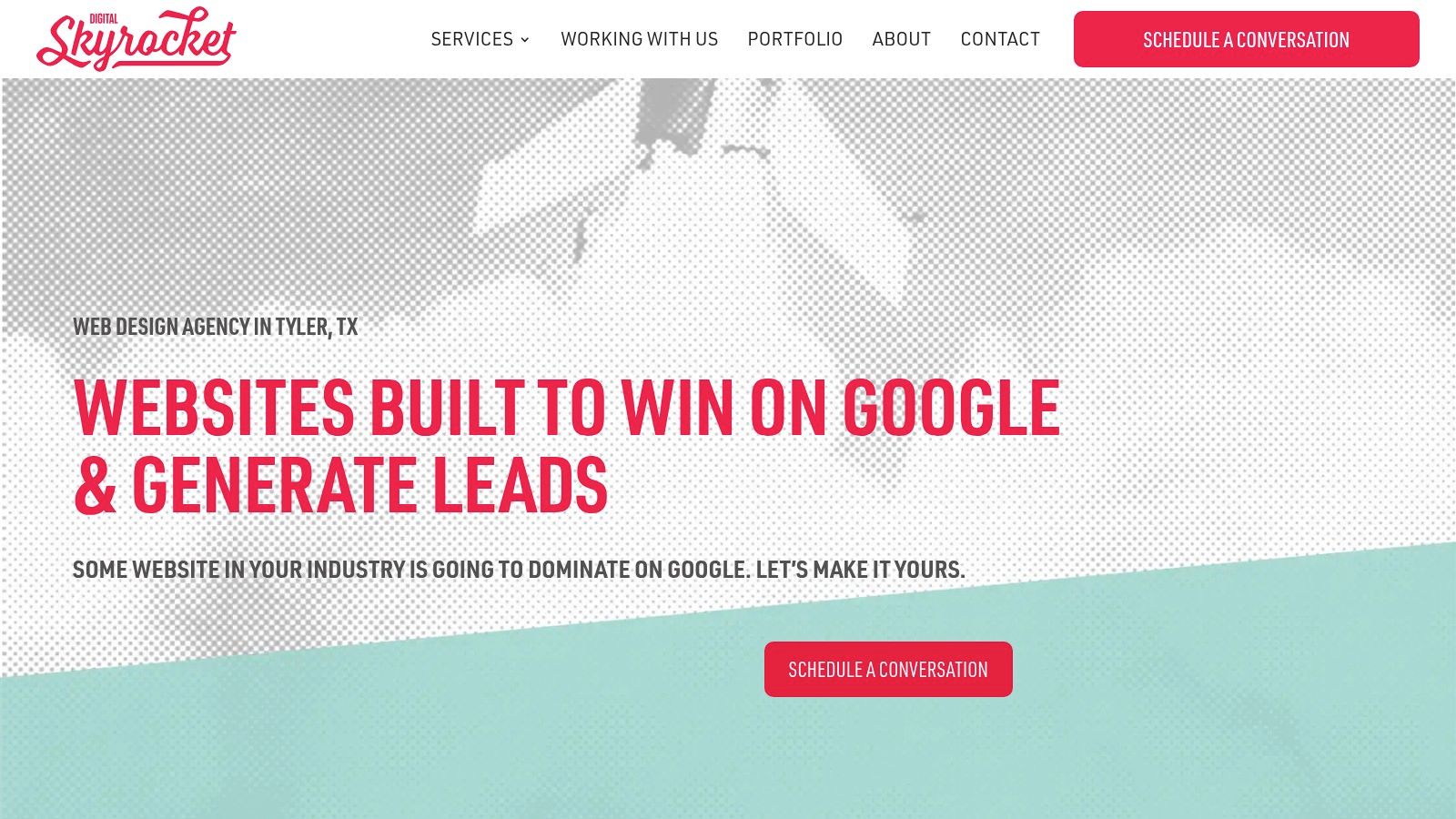
One option in this category is Digital Skyrocket, which focuses on web design, local SEO, and reputation management for service businesses rather than broad, all-channel marketing. That narrower scope usually makes sense when your biggest bottleneck is visibility and conversion from search, not more activity across every platform.
Dominate Local Search and Answer Engines
Local visibility used to mean rankings plus a decent Google Business Profile. That's no longer enough. Now a service company has to compete across traditional organic results, the map pack, Google Business Profile surfaces, and AI-style answer experiences that often summarize before a user ever clicks.
That sounds like a lot. In practice, it works better when you treat it as one integrated system instead of separate projects.
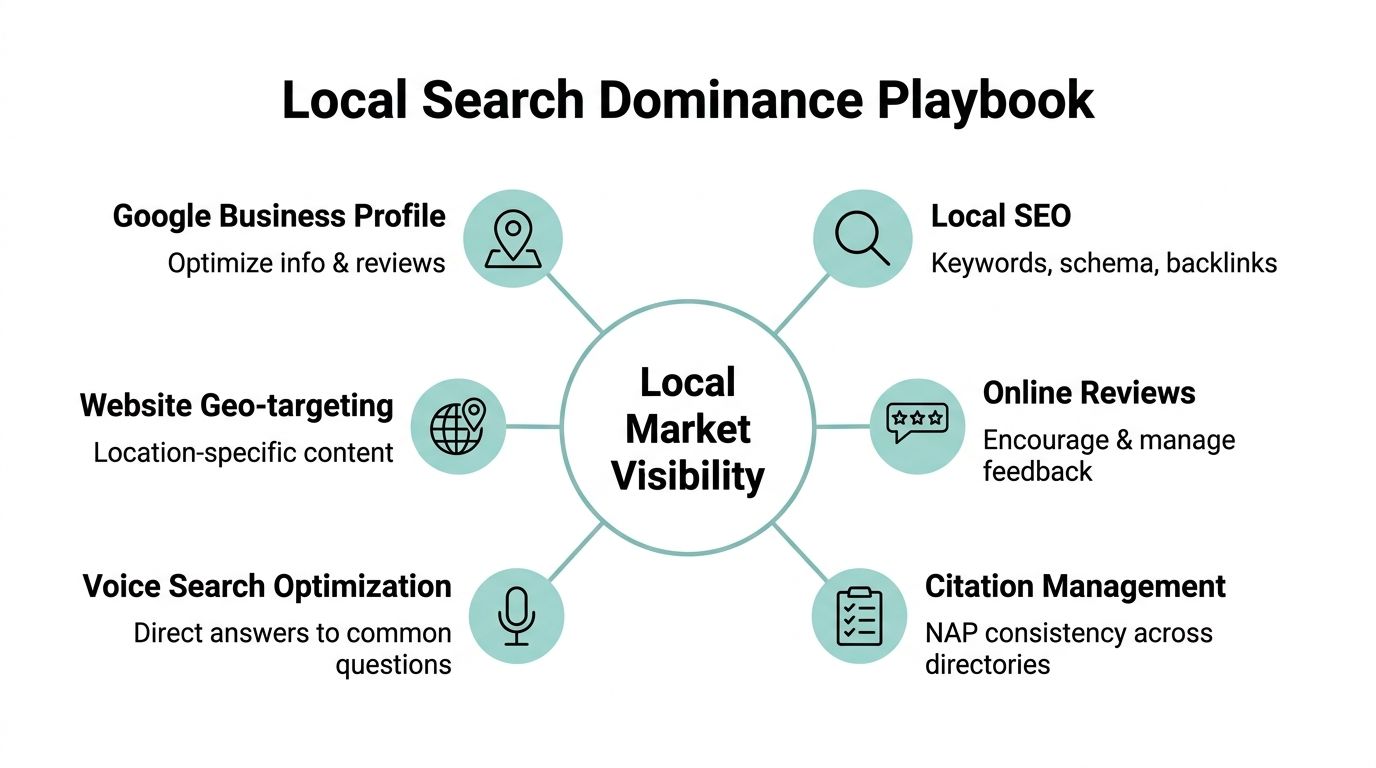
Local visibility is now a three-part system
First, your website needs dedicated service and location coverage. Generic “areas we serve” pages rarely carry enough relevance on their own.
Second, your Google Business Profile needs to reinforce reality. Correct categories, accurate hours, service descriptions, review activity, and consistent business details all help remove ambiguity.
Third, your citation and trust footprint has to match. If your name, address, and phone details drift across directories, profiles, and legal/footer pages, search engines get mixed signals.
A practical local search build usually includes:
- Service-location pages that combine one service with one market
- Consistent NAP data across the website, directory listings, and business profiles
- Review generation tied to completed matters, projects, or service calls
- Local business schema so search engines can parse key facts
- Geo-anchored content that reflects actual communities served
For service-focused local growth, this home services marketing resource gives a useful model for organizing local visibility around real service demand.
AEO changes how service pages should be written
Many marketing guides still talk like ranking a page is the finish line. It isn't. Many marketing guides for service businesses overlook that AI-driven answer interfaces now capture a growing share of high-intent service queries. The new SEO focus is shifting from “ranking pages” to “owning answers,” which requires structuring content in highly specific, schema-compatible question-answer formats, as discussed in this article on underserved market positioning.
That shift changes page structure.
A strong service page should answer the questions a prospect asks right before contacting someone. Not broad educational fluff. Real buying questions. Cost expectations. Process steps. Timeframes. Service area limitations. Insurance questions. What happens next.
Try this structure on key pages:
- Lead with the service and geography. Say exactly what you do and where.
- Answer top intent questions directly. Short, clear answers work better than padded paragraphs.
- Use scannable formatting. Lists, FAQs, subheads, and short sections improve snippet eligibility.
- Support with proof. Reviews, outcomes, photos, certifications, or process detail give the answer weight.
If a page can't answer a prospect's next question without making them dig, it's weaker for both conversion and answer-engine visibility.
Attribution has to be built in from the start
One of the biggest blind spots in marketing for service companies is attribution. Owners often know they got a form fill or a call. They don't know which page, search theme, service area, or content path influenced a signed case or booked project.
That's a problem in long-consideration industries like legal services and higher-ticket home services. You can't improve what you can't connect.
A more useful model treats the website as part sales tool and part attribution layer. Track which pages start the journey, which pages appear before contact, and which local pages correlate with high-value outcomes. Basic reporting won't tell you enough. You need page-level and intake-level visibility that can be matched back to real business results.
Build Unshakeable Trust with Reputation Management
Most owners treat reviews like an afterthought. They remember to ask when they remember. They respond when they have time. They paste a few testimonials on the homepage and move on.
That's too passive. For service businesses, reputation management should work like a system because trust is often the difference between a click and a call.
Reviews are the new referral layer
People still ask friends, neighbors, and colleagues who they trust. But they verify that trust online before they contact you. Reviews, testimonials, badges, case outcomes, before-and-after photos, and response quality all shape that decision.
This is especially true in categories where stakes are high. A personal injury prospect is looking for competence and confidence. A roofer needs visible proof that jobs get finished well. An HVAC company has to look dependable when someone's system fails at the worst time.
That's why reputation work shouldn't stop at collecting stars. It should do three jobs:
- Generate proof consistently after successful engagements
- Distribute proof visibly across the website and business profiles
- Reinforce credibility in the exact moments a prospect is deciding
A simple review system that owners will actually use
The best review systems are boring on purpose. They don't depend on heroic effort.
Use a workflow like this:
- Ask at the right moment. Request feedback right after a successful outcome, not weeks later when the emotional momentum is gone.
- Keep the ask short. One clear message with one direct link works better than a long explanation.
- Route internal issues separately. If someone had a poor experience, that should trigger service recovery, not a public review request.
- Reuse the proof. Pull strong review language into service pages, location pages, and intake pages where hesitation is highest.
A lot of firms also need better tooling and process around testimonial collection, approvals, and multi-location management. If you're comparing operational options, these latest white label software insights are useful for understanding how review and testimonial systems are evolving. Treat future-dated platform trends carefully, but the workflow ideas are still relevant.
One more practical point. Reputation management isn't only defensive. Done well, it strengthens local SEO, improves conversion on service pages, and gives your answer-oriented content more credibility when people cross-check what they read.
Industry-Specific Marketing Examples
The same foundation applies across service businesses, but the priority stack changes by industry. A personal injury law firm, a roofing company, and an HVAC contractor all need visibility, trust, and conversion. They just don't need them expressed the same way.
Personal injury law firm
A personal injury firm usually needs depth, not breadth. The winning pages are often built around case types, local intent, and trust-heavy proof.
That means:
- Specific legal service pages instead of a broad “practice areas” overview
- Strong trust signals such as attorney credentials, verdicts or outcomes where appropriate, testimonials, FAQs, and intake clarity
- Location relevance without creating thin, repetitive city pages
- Clear qualification paths so intake can separate strong matters from poor-fit inquiries
For firms in this category, exclusivity by market matters operationally too. If an agency works with one personal injury firm per service area, that usually reduces channel conflict and keeps local strategy cleaner.
Roofing company
Roofing has a different demand pattern. Timing, weather, and urgency shape search behavior more heavily. Storm-related demand can change what people search for and how quickly they act.
The website should usually emphasize service segmentation and local proof. Replacement, repair, storm damage, inspections, insurance-related process questions, and financing each deserve their own treatment where relevant. Project galleries and review placement matter more here because visual trust moves the sale.
A useful reality check comes from contractor-focused research: for service contractors, local SEO and a well-optimized Google Business Profile often mature over 4-12 months to become the lowest cost-per-lead channel, requiring service-segmented landing pages and consistent NAP data to maximize calls from the Map Pack, according to Clicks Geek's write-up on concrete contractor marketing.
HVAC contractor
HVAC sits in a hybrid position. Some searches are urgent and transactional. Others are seasonal, maintenance-driven, and educational.
That means the content mix usually needs to balance emergency pages with practical trust-building content such as repair process pages, maintenance plan explanations, common system issues, and service-area pages. Google Business Profile performance also matters heavily because a lot of HVAC demand happens on mobile and under time pressure.
If you want a category-specific example of how that structure can look, this digital marketing for HVAC companies guide shows how local visibility, service segmentation, and conversion design fit together.
A quick comparison makes the difference clearer:
| Business type | Priority pages | Main trust drivers | Common mistake |
|---|---|---|---|
| Personal injury firm | Case-type and location pages | Credentials, reviews, outcomes, intake clarity | Writing broad legal content that doesn't attract case-ready prospects |
| Roofing company | Service-segmented local pages | Project proof, reviews, financing, storm response clarity | Using one generic services page for every job type |
| HVAC contractor | Emergency, repair, maintenance, and local pages | Speed, availability, review quality, easy calling | Ignoring mobile friction and GBP optimization |
Your Service Marketing Intake Checklist
If you want your marketing to produce better leads, start by auditing what you already have. Most owners don't need more activity first. They need a clearer picture of what's missing.
Use this checklist the same way an agency should use an intake form. Answer truthfully. If you can't answer a question, that's usually where the next problem is hiding.
Strategy and positioning
- Core objective. What specific service do you want more inquiries for, in which markets?
- Ideal client. Which jobs, matters, or customers are most profitable and operationally healthy for your team?
- Exclusions. Which leads waste time, fall outside your service area, or rarely close?
Website and conversion
- Mobile clarity. Can a first-time visitor understand what you do, where you work, and how to contact you within seconds?
- Page structure. Do you have dedicated service pages and useful location pages, or one catch-all page doing too much?
- Trust placement. Are reviews, proof points, and credentials visible near forms and calls to action?
Local SEO and AEO
- Google Business Profile. Is it complete, current, and aligned with the services you want to sell?
- NAP consistency. Does your business information match across your site and major profiles?
- Answer-ready content. Do your key pages directly answer buyer questions like how much, steps, and what to expect? Those high-intention search phrases often signal users further down the decision funnel, which supports the case for granular service pages, as explained in this video on high-intent search strategy.
Reputation and attribution
- Review system. Do you have a repeatable process to request, monitor, and reuse client feedback?
- Lead tracking. Can you connect calls and form submissions back to the page, service, and location that produced them?
- Revenue visibility. Can you tell which marketing inputs influence signed clients or booked work, not just raw inquiries?
If you can answer most of that clearly, you're in a strong position. If not, that's not failure. It's the start of a plan.
If you want help building a clearer lead-generation system around web design, local SEO, and reputation management, take a look at Digital Skyrocket. They focus on service businesses, build for conversion and local search visibility, and work with only one personal injury firm per service area. If your firm is outside Texas and needs stronger visibility from Google and answer engines, that scope can be a practical fit.