
The Best Law Firm Sites Do More Than Look Credible
A polished legal website can still lose a prospective client. Visitors need to see that a firm handles their kind of matter, understand how its attorneys can help, and find a clear way to get in touch. That's why the best law firm website design isn't a contest in dramatic photography or clever animation. It's a complete system connecting credible messaging, useful practice-area pages, local search, mobile usability, trust signals, and intake.
The American Bar Association's 2024 Legal Technology Survey found that 90% of responding firms had a website, compared with 94% in 2022. A site is now a baseline, not a differentiator. A firm has to make its website useful to the person comparing attorneys, including someone who was referred and is checking whether the firm fits their needs. For example, someone finding the right adoption attorney in Texas needs more than a polished homepage. They need relevant experience, clear service-area information, and an easy next step.
The agencies below are evaluated on decisions that can affect business results: credibility, intake experience, mobile usability, local search readiness, conversion paths, and ownership. Their own claims are not independent performance audits, so ask for relevant examples and clear project terms before hiring.
Table of Contents
- 1. PaperStreet
- 2. Postali
- 3. Rankings.io
- 4. LawRank
- 5. Juris Digital
- 6. Great Jakes
- 7. MeanPug Digital
- Top 7 Law Firm Website Design Agencies Compared
- Turn the Best Website Patterns Into Qualified Inquiries
1. PaperStreet
PaperStreet is a legal-industry agency with offerings for solo attorneys through large firms. Its website tiers range from an existing design framework to custom and enterprise projects, giving firms a starting point for comparing scope and budget. Published starting prices are about $3,000 for Essentials, $9,500 for Plus, $15,000 for Custom, and $40,000 for Enterprise. Those are starting points, not quotes for every project.
The agency primarily builds on WordPress and offers optional SEO, content, branding, and marketing services. That range can suit a firm that wants one provider to coordinate several parts of its digital presence. Firms should still separate the website deliverables from optional ongoing services so they can compare proposals on equal terms.
Where PaperStreet fits
The main advantage is choice. An existing framework may help a smaller firm get a site underway without funding a fully custom build, while a larger firm can explore more custom work. The trade-off is that a framework-based site may be less distinctive, and broader service options can expand project scope.
PaperStreet says clients own their sites and aren't required to buy ongoing services. Confirm that in the contract, along with administrator access, hosting arrangements, and what files or accounts the firm receives at handoff. Ownership language matters most when a firm later changes agencies or brings maintenance in-house.
A legal website should also give visitors a direct route from practice-area information to contact. For a firm comparing providers, Digital Skyrocket's legal website design approach is another reference point for evaluating how design, search visibility, and inquiry paths fit together.
Practical rule: Compare the included page count, content responsibilities, and handoff terms, not just the entry price.
Best fit: Firms that want a legal-specialist provider with multiple build tiers and the option to add marketing services.
2. Postali
Postali connects website design with content planning, technical SEO, conversion strategy, and analytics. Its WordPress projects are intended for firms ranging from small practices to multi-state operations, so the useful question isn't whether a design looks modern. It's whether the proposed site structure matches the firm's practice areas, audiences, and intake process.
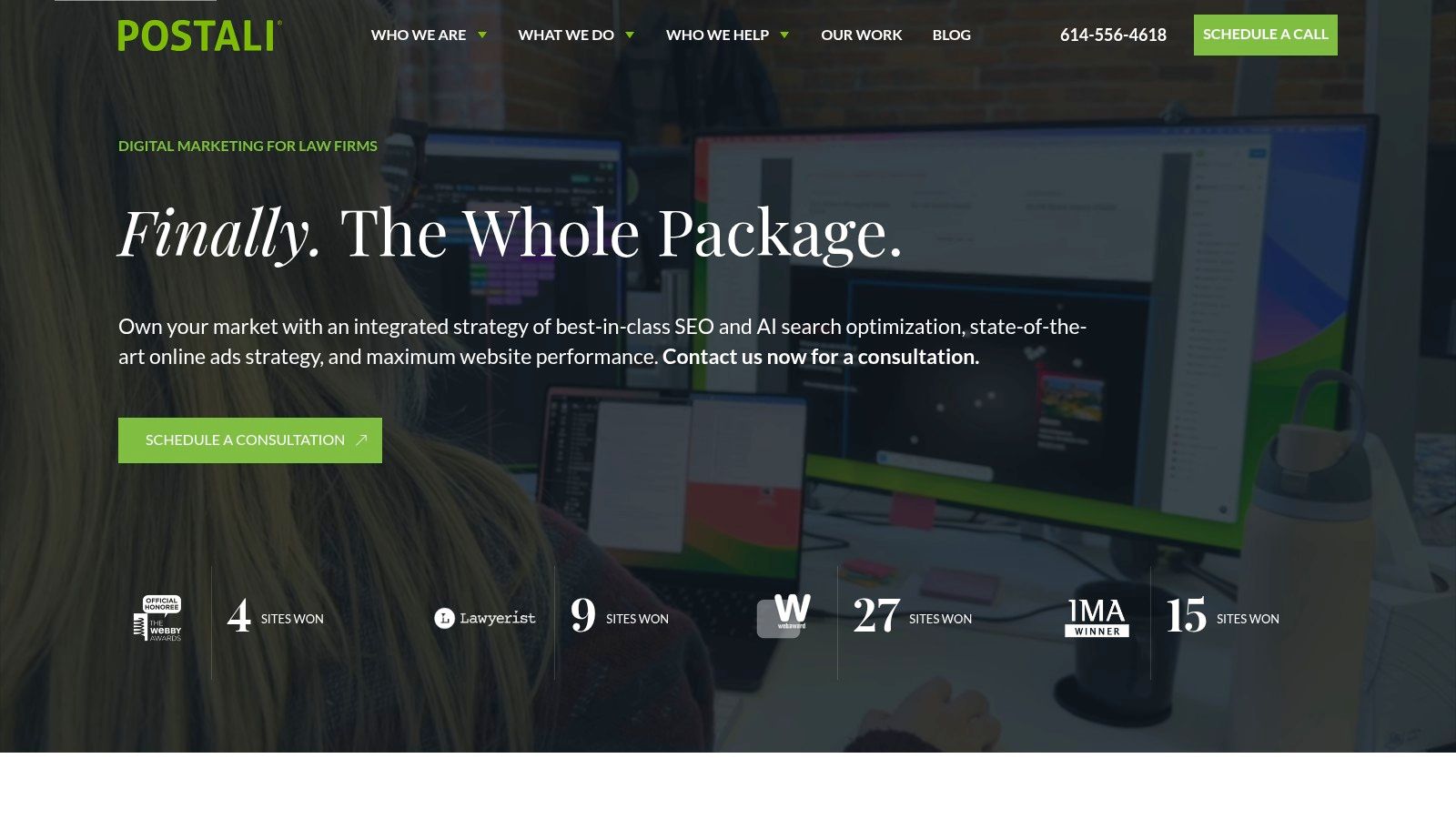
Published website options start at $2,500 for Core and $6,500 for Crest, while Peak is custom-priced. Treat those amounts as initial comparison points. Page count, integrations, and custom functionality can affect the final scope and cost.
What to pin down
Postali's positioning brings search and lead tracking into the design conversation, which is useful if a firm wants to understand whether a site attracts relevant visitors and encourages them to inquire. Higher-tier builds can include additional layouts and custom functionality. Ask for the deliverables in writing, including which pages are included, who writes or approves content, and what analytics will be configured.
Ongoing optimization may involve a continuing agency relationship. That can be appropriate if the firm wants ongoing support, but it isn't the same purchase as a defined website build. Agree on what happens after launch and whether the firm retains its WordPress access and analytics accounts.
Firms considering this kind of integrated build can compare the proposed work with SEO and web design for lawyers, particularly the treatment of page architecture, technical SEO, and inquiry flows.
Best fit: Firms that want website design and search planning considered together, and are prepared to define ongoing work separately from the initial build.
3. Rankings.io
Rankings.io makes the most sense to evaluate for personal injury firms competing in search. Its website gallery can be filtered by practice area, location, and firm size, which gives prospective clients a way to inspect work relevant to their own market rather than relying only on a general showcase.
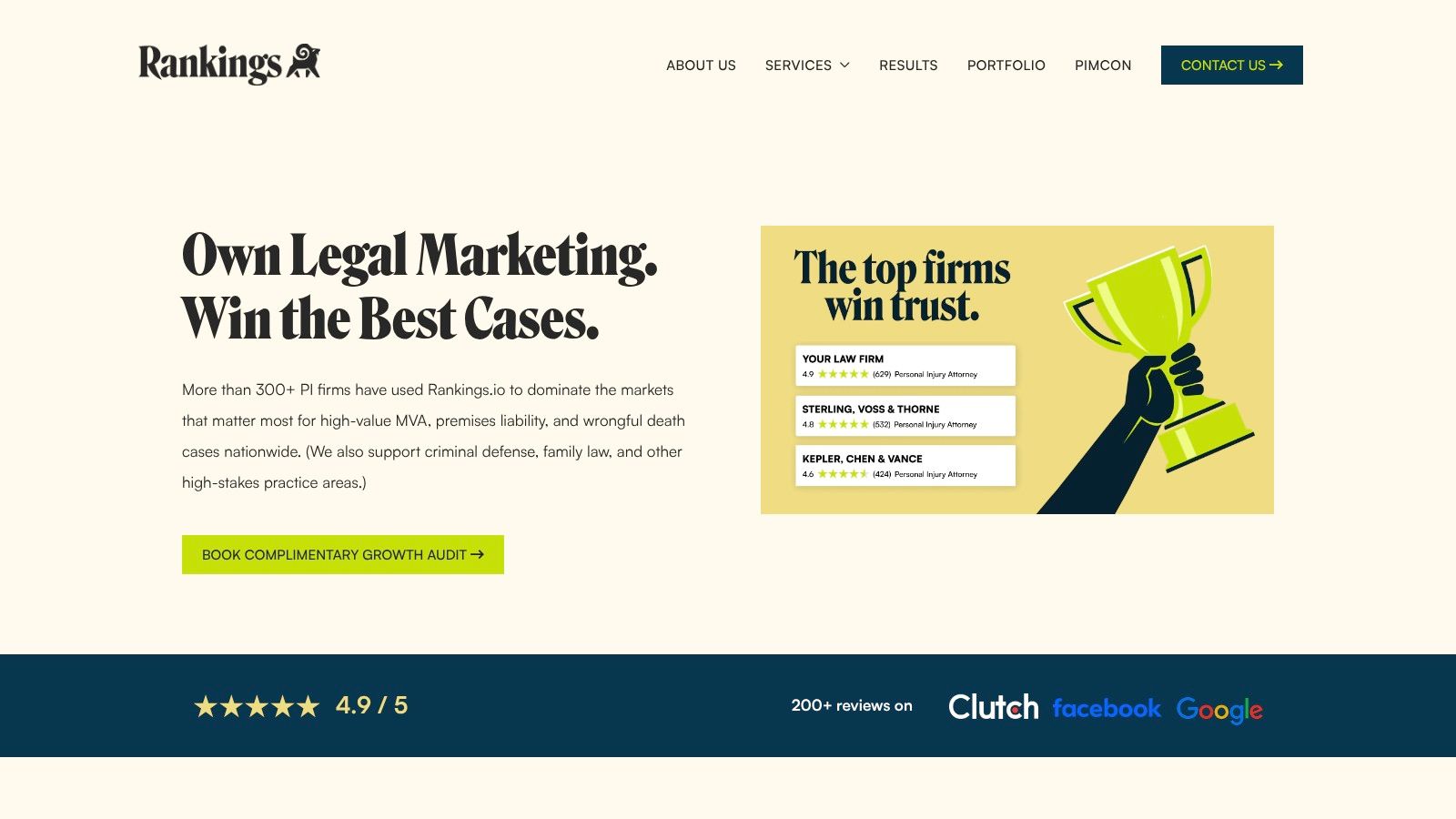
The agency positions web design around SEO, speed, and lead conversion. That focus is relevant because a slow, complicated mobile experience can frustrate people before they reach a firm's phone number or intake form. Google's analysis of mobile landing pages found that, as load time increased from one second to ten seconds, the probability of a visitor bouncing rose by 123% (Google's mobile landing-page analysis). The analysis covered mobile landing pages broadly, not law firms specifically, but it supports a practical requirement: evaluate real mobile performance, not just desktop screenshots.
Review the evidence, not the pitch
Rankings.io offers prospective clients a complimentary growth audit. Use that conversation to ask what it measures and what access or information the firm must provide. Website pricing isn't prominently published in the reviewed materials, so request an itemized proposal.
The agency's apparent personal injury emphasis may make it less suitable for firms in other practice areas. Even for personal injury firms, performance claims should be tested against comparable work. Ask how the agency measures qualified inquiries, which responsibilities belong to the firm, and whether the firm can retain its site and accounts if the relationship ends.
Firms focused on this practice area can also review personal injury lawyer website design considerations when comparing navigation, mobile calls to action, and case-intake paths.
Best fit: Personal injury firms that want a legal-specialist provider with a visible portfolio and a strong search-performance focus.
4. LawRank
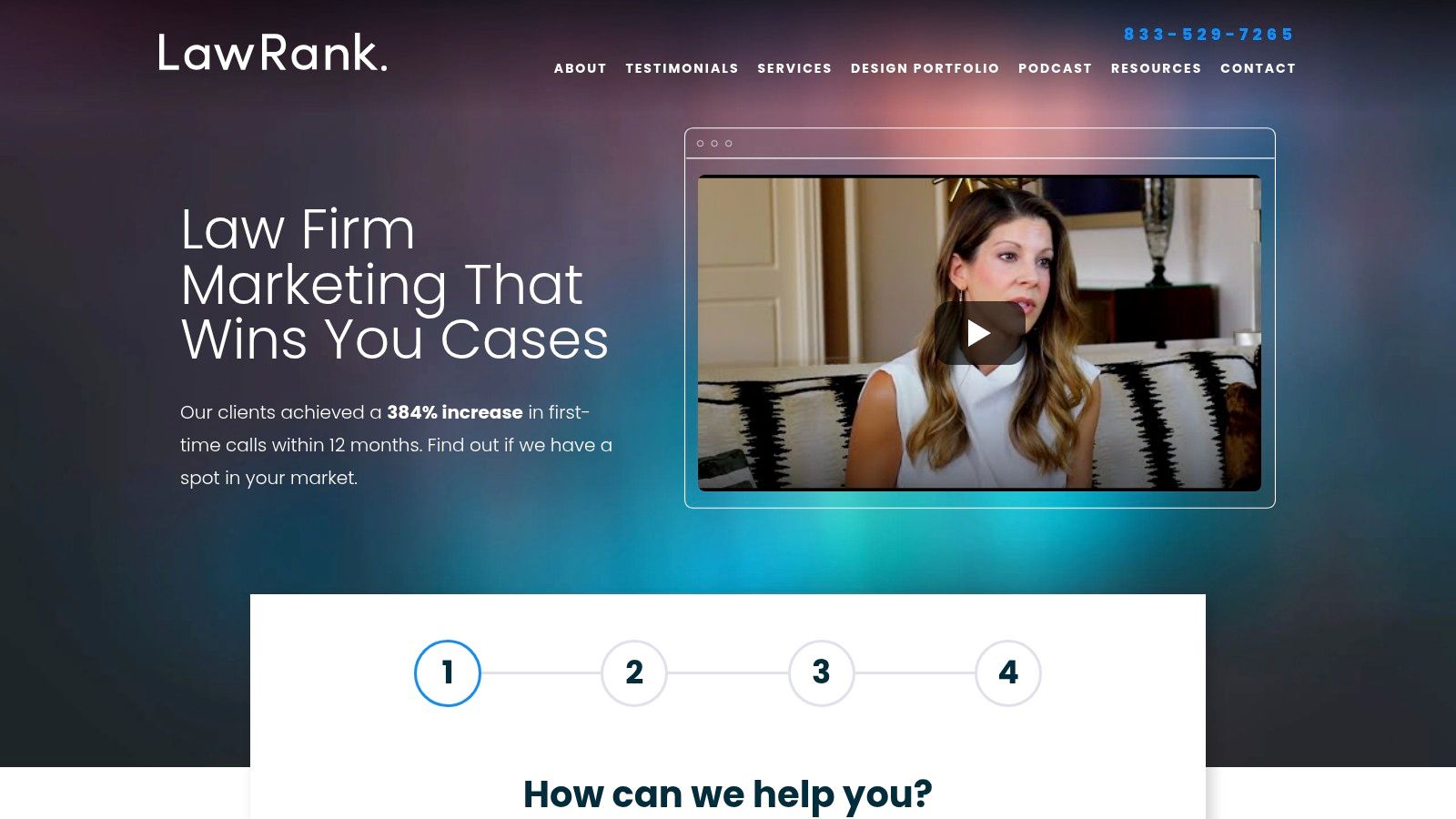
LawRank offers law firm web design alongside legal SEO, local SEO, AI-related search services, and paid search. That combination may appeal to a firm that wants one provider coordinating site work with search marketing, particularly when local visibility across specific jurisdictions is a priority.
Coordinate services without losing control
A coordinated provider can make it easier to align practice-area content, local search pages, and calls to action. But bundling isn't automatically an advantage. A firm seeking design and organic search support may not need paid search, so it should ask for a proposal that clearly separates each service and its cost.
Website pricing wasn't publicly verified in the reviewed materials. Request a scoped proposal and clarify who owns the site, whether the firm has CMS and hosting access, and what happens to SEO assets if it leaves. These questions belong in the contract, not in an informal sales conversation.
The website also has to meet professional-advertising requirements. ABA Model Rule 7.1 generally prohibits false or misleading communications about a lawyer's services (ABA guidance on attorney advertising ethics). Review case-result language, testimonials, attorney credentials, and claims such as “best” or “guaranteed” with the rules in each relevant jurisdiction in mind.
Best fit: Firms that want design and legal search services under one provider, and will carefully define ownership, scope, and advertising review.
5. Juris Digital
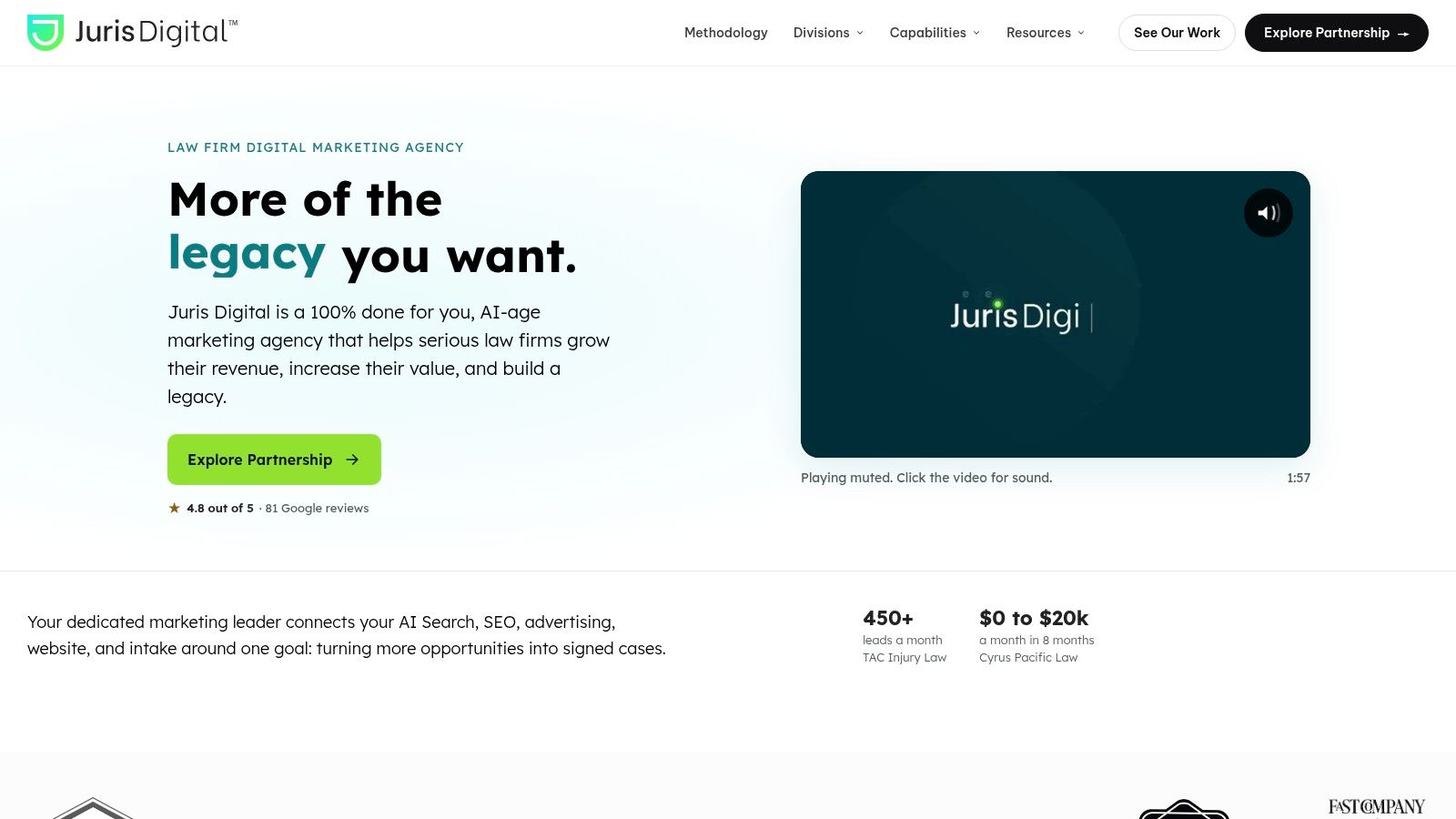
Juris Digital's website projects address more than appearance. Its services can include strategy, content, responsive development, integrations, and migration planning. That makes the agency worth considering when an existing site has operational problems, such as difficult publishing, an unclear inquiry process, or a migration that needs redirects and quality assurance.
Make the project boundaries explicit
A legal website's architecture should help different visitors find the right practice area and contact path. Juris Digital's work may include planning around audiences and inquiries, refining or writing content, and integrating forms, scheduling, chat, call tracking, CRM, or analytics. Not every firm needs every feature. Choose integrations based on how staff respond to leads and track prospective matters.
Migration work deserves special attention. Agree on who handles redirects, metadata, testing, and post-launch fixes, then document the handoff. A design launch that loses important pages or breaks inquiry tracking can create problems that visual review won't catch.
Pricing and timelines are scoped individually. Standalone website projects are available, with ongoing marketing described as optional. Firms with complex content or technical requirements may value that project flexibility, but they should still define approval stages, responsibilities, and acceptance criteria before work begins.
Best fit: Firms planning a complex redesign or migration, especially when content, integrations, and technical handoff need coordinated management.
6. Great Jakes
Great Jakes says it works exclusively with law firms and combines brand strategy with website strategy, UX, and development. Its custom, brand-led approach is most relevant to firms that need a differentiated professional-services presence and have several stakeholders involved in decisions.
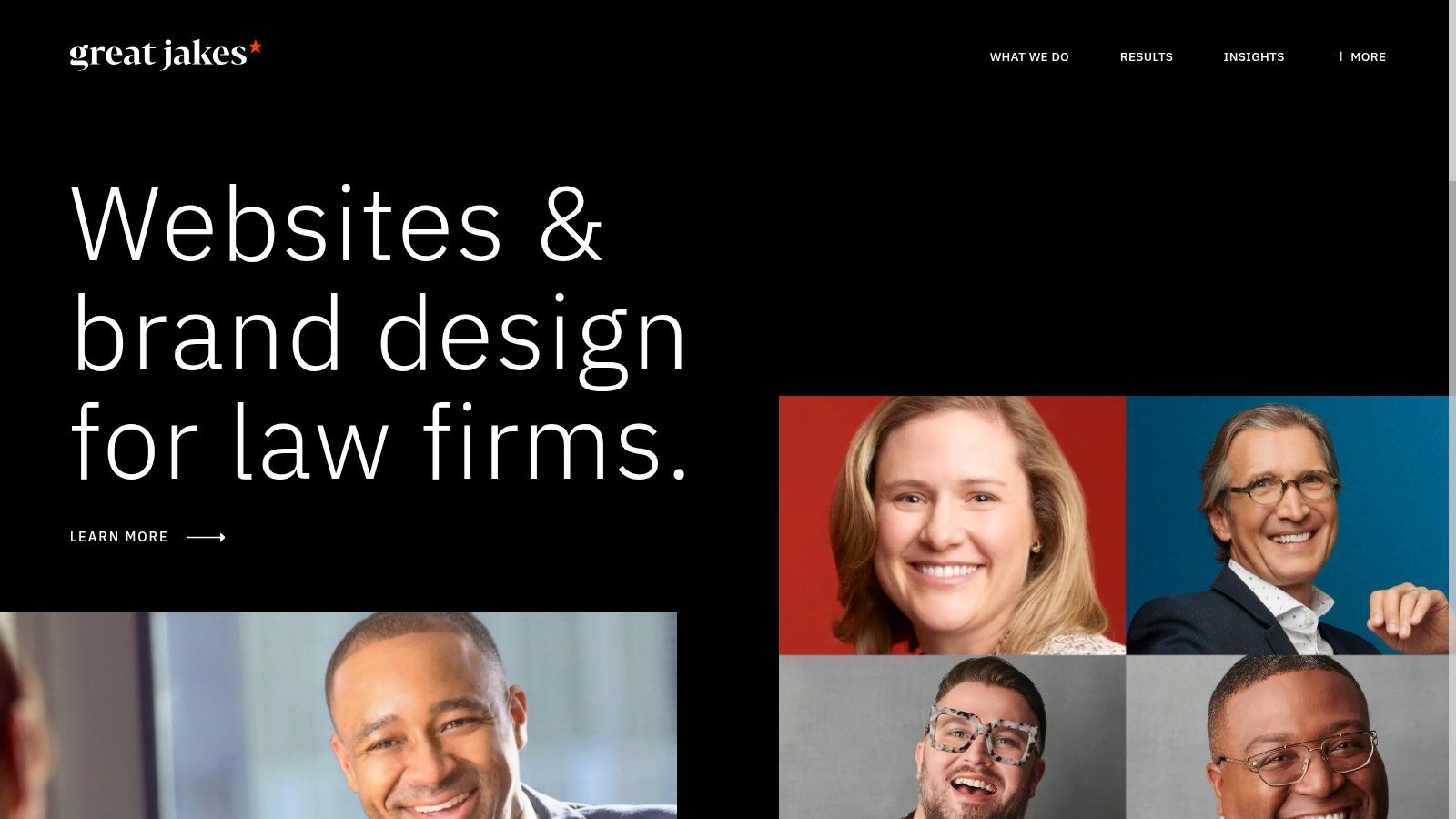
The agency's service range includes brand identity, CMS development, data migration, hosting, and maintenance. Its in-house design and development model is described by the company. Firms should verify who will work on their project and how strategy, design, development, and ongoing support are divided.
Pay for differentiation only when you need it
A custom brand process can help a firm clarify how it wants to be understood by clients and referral sources. It can also be more than a small firm needs if the priority is a straightforward, easy-to-maintain site. Pricing wasn't published in the reviewed materials, so ask for a scoped proposal and an explanation of what drives the budget.
Don't let brand work crowd out the site's practical requirements. Ask how the build handles search architecture, page content, mobile use, accessibility testing, and ongoing optimization. WCAG 2.2 frames accessibility around content that is perceivable, operable, understandable, and robust (the WCAG 2.2 standard). For a law firm, that translates into usable navigation and forms, clear labels and errors, and content that works with assistive technology.
Best fit: Mid-size and larger firms investing in brand differentiation, or firms with complex stakeholder and content needs.
7. MeanPug Digital
MeanPug Digital serves firms of different sizes and practice areas, with a stated focus on bespoke website design and development. The agency says it uses established technologies such as WordPress or static delivery approaches rather than proprietary systems. For firms concerned about vendor lock-in, that platform position is worth discussing in detail.
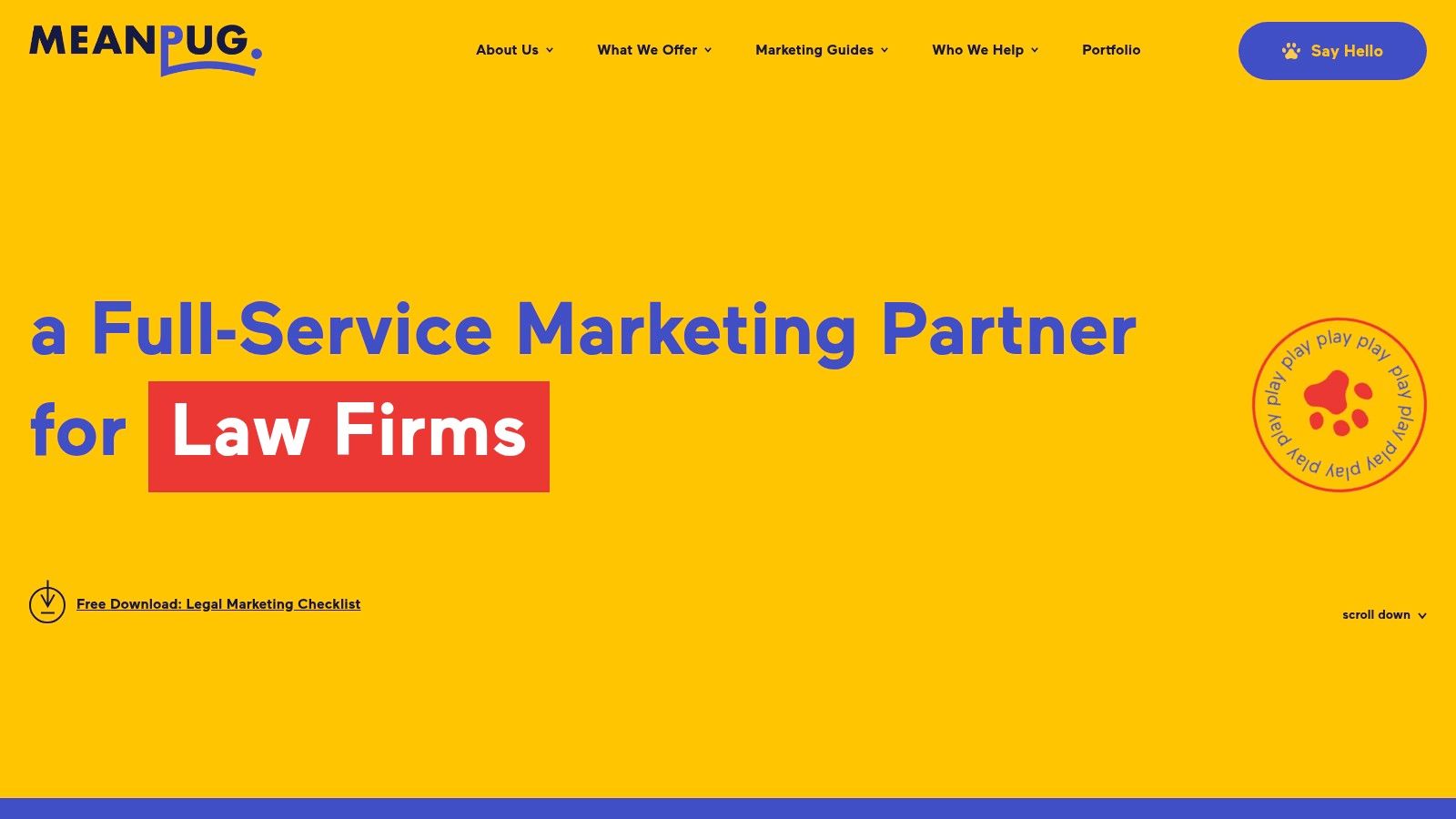
MeanPug presents mobile usability, performance, and clear inquiry paths as part of the website's purpose. It also offers SEO, content, and paid advertising. Website pricing wasn't specified in the reviewed materials, so ask for separate costs and deliverables for the build and any additional services.
Confirm the platform and the handoff
A WordPress build and a static delivery approach can have different maintenance and publishing workflows. Ask which approach the agency recommends, why it fits the firm's content needs, and who will manage updates after launch. Confirm access to the CMS, hosting, domain, analytics, and source files in writing.
The agency's claims about awards, results, and uniqueness are company-reported. Treat them as prompts for due diligence, not proof that a similar firm will get the same outcome. Request relevant examples and ask how the agency measures qualified inquiries, rather than counting only traffic or form submissions.
Best fit: Firms seeking a legal-focused custom build and wanting to discuss non-proprietary platforms alongside performance and intake.
Top 7 Law Firm Website Design Agencies Compared
| Provider | Implementation Complexity | Resource Requirements | Expected Outcomes | Ideal Use Cases | Key Advantages |
|---|---|---|---|---|---|
| PaperStreet | Tiered; from adapted designs to custom builds | Published starts: $3,000–$40,000; optional marketing adds scope | WordPress law firm site, with optional SEO and content support | Firms seeking tiered options and published budget starting points | Long legal-sector track record; says clients own their sites |
| Postali | Moderate to high; includes content, SEO, and conversion planning | Published starts: $2,500 Core, $6,500 Crest; Peak custom-priced | Mobile-friendly site with analytics and search optimization | Small practices through multi-state firms seeking a marketing-informed build | Combines design, SEO, conversion strategy, and lead tracking |
| Rankings.io | Consultation-led; scope and cost require a proposal | Pricing not publicly listed; complimentary growth audit offered | Site focused on search visibility, speed, and lead conversion | Especially personal injury firms in competitive search markets | Legal specialization and a practice-area-filterable portfolio |
| LawRank | Scope depends on website and search services selected | Pricing not publicly verified; proposal required | Coordinated website, SEO, local SEO, and optional paid search | Firms seeking website and search marketing from one provider | Legal focus and integrated local search services |
| Juris Digital | Custom-scoped; may include content, integrations, or migration | Pricing and timelines set individually; standalone site work available | Site addressing technical needs, inquiry paths, and migration requirements | Firms with complex content, integrations, or migration needs | Covers strategy and launch details; ongoing marketing is optional |
| Great Jakes | High; custom brand, UX, and development work | Pricing not publicly listed; hosting and maintenance available | Distinctive, brand-led law firm website | Mid-size and large firms with complex brands or stakeholder needs | Exclusive legal focus and coordinated brand and website services |
| MeanPug Digital | Custom; WordPress or static delivery options | Pricing not publicly specified; optional marketing services | Bespoke site emphasizing mobile usability, performance, and inquiries | Firms seeking a custom site on a non-proprietary platform | Legal-industry focus and emphasis on performance and intake |
Turn the Best Website Patterns Into Qualified Inquiries
The strongest provider choice depends on the firm's audience and needs, not on which portfolio looks most dramatic. Start by defining the practice areas and service locations the site must serve. Then list what a prospective client needs to verify, such as attorney credentials, relevant experience, jurisdiction, process, reviews, and a realistic way to begin an inquiry.
Simplify the path to contact. Make practice-area pages easy to find, use plain language, and give visitors a clear next step on both desktop and mobile. Test menus, phone links, and forms on actual mobile devices. Accessibility belongs in the build and quality-assurance process, not as an overlay added after launch. A public-facing website can advertise legal services, but the content still needs to comply with applicable professional-conduct rules. ABA Model Rule 7.2 also requires covered communications to identify the responsible lawyer or firm and provide contact information (ABA Model Rule 7.2).
Before hiring, document ownership, CMS access, hosting, analytics, content responsibilities, migration tasks, and post-launch support. Agree on how the firm will track calls, forms, and booked consultations so the team can judge whether the site produces qualified inquiries, not just a more polished appearance. A clear process for responding to online inquiries matters too. Firms reviewing after-hours intake can consider whether a service such as SkipCalls AI phone answering fits their response workflow.
Digital Skyrocket offers web design, local SEO, answer engine optimization, and conversion work for law firms seeking to connect search visibility with inquiries. Its process includes discovery, content planning, custom WordPress development, technical implementation, reporting, and ongoing optimization. Compare that approach with other providers by reviewing scope, ownership terms, and the outcomes each provider will measure. Choose the partner that can explain how its design decisions support the firm's specific practice areas and intake process.
Digital Skyrocket builds custom websites and provides local SEO, answer engine optimization, and conversion optimization for law firms that want more qualified inquiries. If your firm is planning a redesign, visit Digital Skyrocket to discuss how your site can support search visibility and client intake.