
You're checking Google between patients and there's a new one-star review. It isn't about your crown prep or your hygienist. It's about a 40-minute wait, a bill no one explained, and a front desk that sounded rushed. You know the clinical work was fine. A prospective patient reading that review doesn't, and she has three other practices on the same search results page.
That's why reputation management for dentists can't run as a side marketing task. You need a system that fixes the causes your reviews keep naming, asks for feedback in a compliant way, and responds without creating a privacy problem.
Table of Contents
- Why Dental Reputation Is an Operations Problem, Not a Marketing Campaign
- Running a Reputation Audit Before You Change Anything
- Building a Review-Generation System That Stays Compliant
- Responding to Negative Reviews Without Violating HIPAA
- Optimizing Google Business Profile and Citation Consistency
- Choosing Metrics That Actually Predict Practice Growth
- When to Outsource Reputation Management and How to Vet an Agency
Why Dental Reputation Is an Operations Problem, Not a Marketing Campaign
A patient leaves convinced the dentistry was good, then gets home to soreness he wasn't warned about and a statement that doesn't match the estimate he remembers. He doesn't call to sort it out. He writes a review that night, and the practice learns about the breakdown from a public post instead of its own team.
That pattern explains why review requests alone don't fix reputation. If scheduling runs late most afternoons, estimates aren't confirmed in writing, or hygiene hands off to checkout with missing details, you'll keep producing the same complaints. More prompts just bring those complaints to the surface faster.
What Patients Actually Reward and Punish
The clinical outcome matters, but reviewers often judge what they can easily describe. That's wait time, parking and location, how clearly options were explained, whether they felt rushed, and whether billing matched expectations. A large U.S. analysis of 204,751 dentists on Healthgrades found ratings tied to experience factors, especially waiting time with statistical significance at P < 0.001, and a prior survey cited in that work found 59% of respondents considered patient-review websites important, 35% had selected a doctor because of good ratings, and 37% had avoided one because of bad ratings.
Those numbers change the assignment for your office manager. She's not just collecting praise. She's tracking whether late starts, insurance confusion, or post-op communication keep showing up and pushing the issue back into operations.
A review program that doesn't change scheduling, estimates, or handoffs is just better documentation of the same problems.
Good practices reduce friction before the first appointment even starts. Clear explanations of what happens at an initial visit, what records to bring, and what happens after treatment set expectations early. A resource like a Scottsdale dentist new patient guide shows the kind of pre-visit clarity that lowers surprise, because surprised patients are the ones most likely to write frustrated reviews.
Reputation work therefore belongs in your weekly operations review, not only in marketing. Treat every recurring theme as a process defect until you've proven otherwise. Then review requests amplify a better experience instead of papering over a broken one.
Running a Reputation Audit Before You Change Anything
Don't buy software or print QR cards until you know what a prospective patient sees today. Start logged out, in a private browser window, and search your practice name, your doctors' names, and common service plus city combinations. Write down what appears first, because that's your actual first impression, not the homepage you're proud of.
Then check the profiles patients use to compare you. That includes Google Business Profile, Healthgrades, Zocdoc, Yelp, Facebook, and your own website testimonials page. Look for duplicate listings, old addresses, missing providers, and reviews you've never seen.
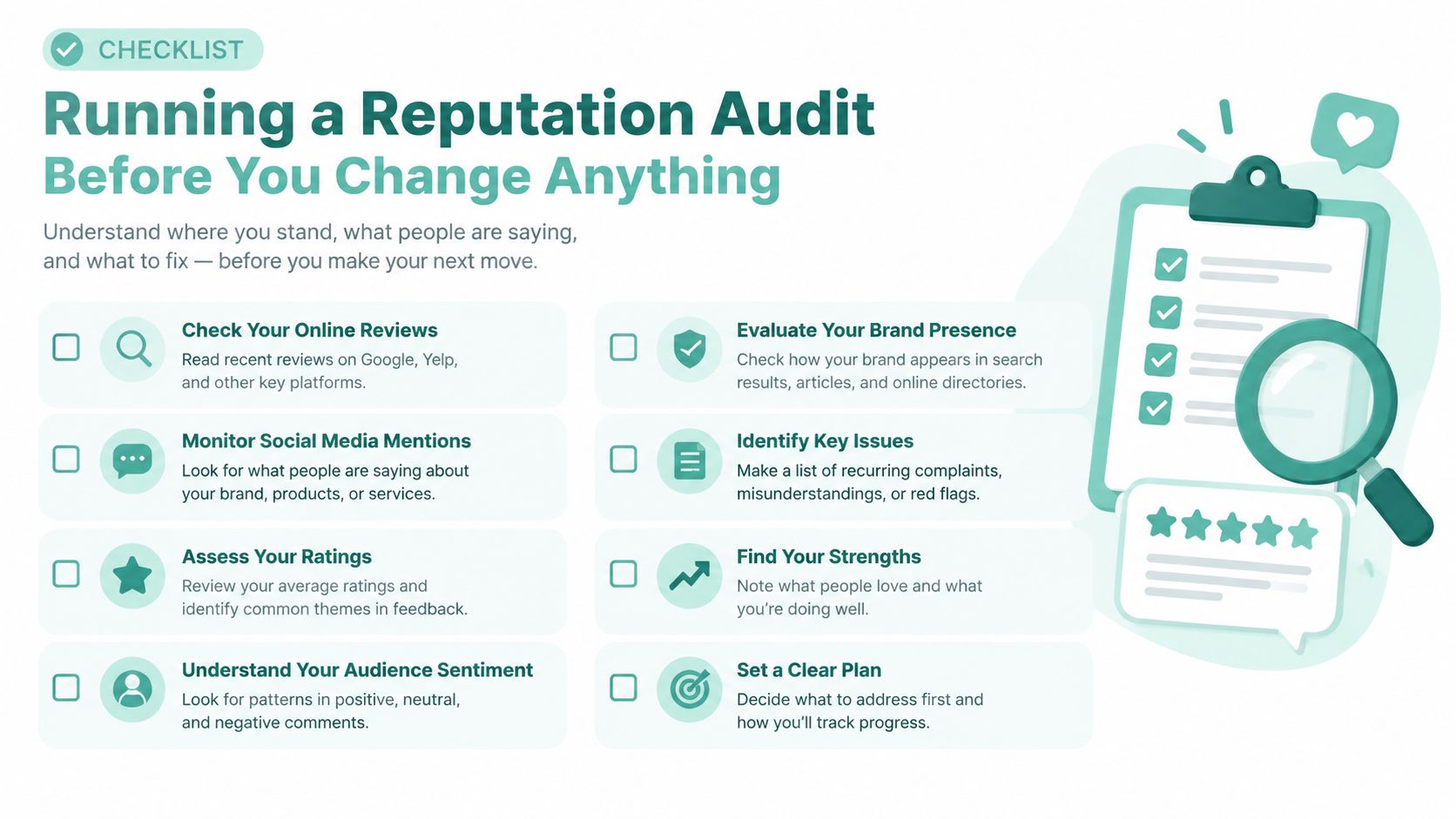
Build a 90-Day Baseline
Pull at least the most recent quarter of reviews across platforms into one sheet. Record the date, platform, rating, provider or location mentioned, response status, and a short theme tag such as wait, billing, pain, scheduling, or staff communication. You're looking for patterns, not arguing with individual reviewers.
- Volume and velocity: Count new reviews by month so you can tell whether feedback is steady or arrives in bursts.
- Recency: Note the date of the newest review on each platform and how old the visible top reviews are.
- Sentiment themes: Code the reason behind each rating instead of tracking stars alone.
- Response coverage: Mark which reviews got a reply, how quickly, and whether the reply stayed privacy-safe.
- Listing accuracy: Compare name, address, phone, hours, website, and booking links everywhere they appear.
Recency isn't cosmetic. In a 2025 survey of 1,212 healthcare consumers, 40% considered reviews older than one to two years outdated, while 59.48% trusted providers more when they responded to reviews. An old, unanswered profile can look abandoned even if your average rating is strong.
Score It and Pick the First Fixes
Give each area a simple red, yellow, or green rating. Red means a patient could be misled, can't reach you easily, or sees a privacy-risky response. Fix inaccurate hours, duplicate listings, and noncompliant replies first.
Next, address the theme that appears most often in negative text. If billing surprises outnumber clinical complaints, new templates won't help until estimates improve. Save lower-impact work, such as refreshing photos or rewriting a bio, for monthly maintenance after the blocking issues are cleared.
Date the audit and keep it. You'll rerun the same checks each quarter so progress is measurable. Without that written baseline, every bad review feels like an emergency and every good one feels like proof you're done.
Building a Review-Generation System That Stays Compliant
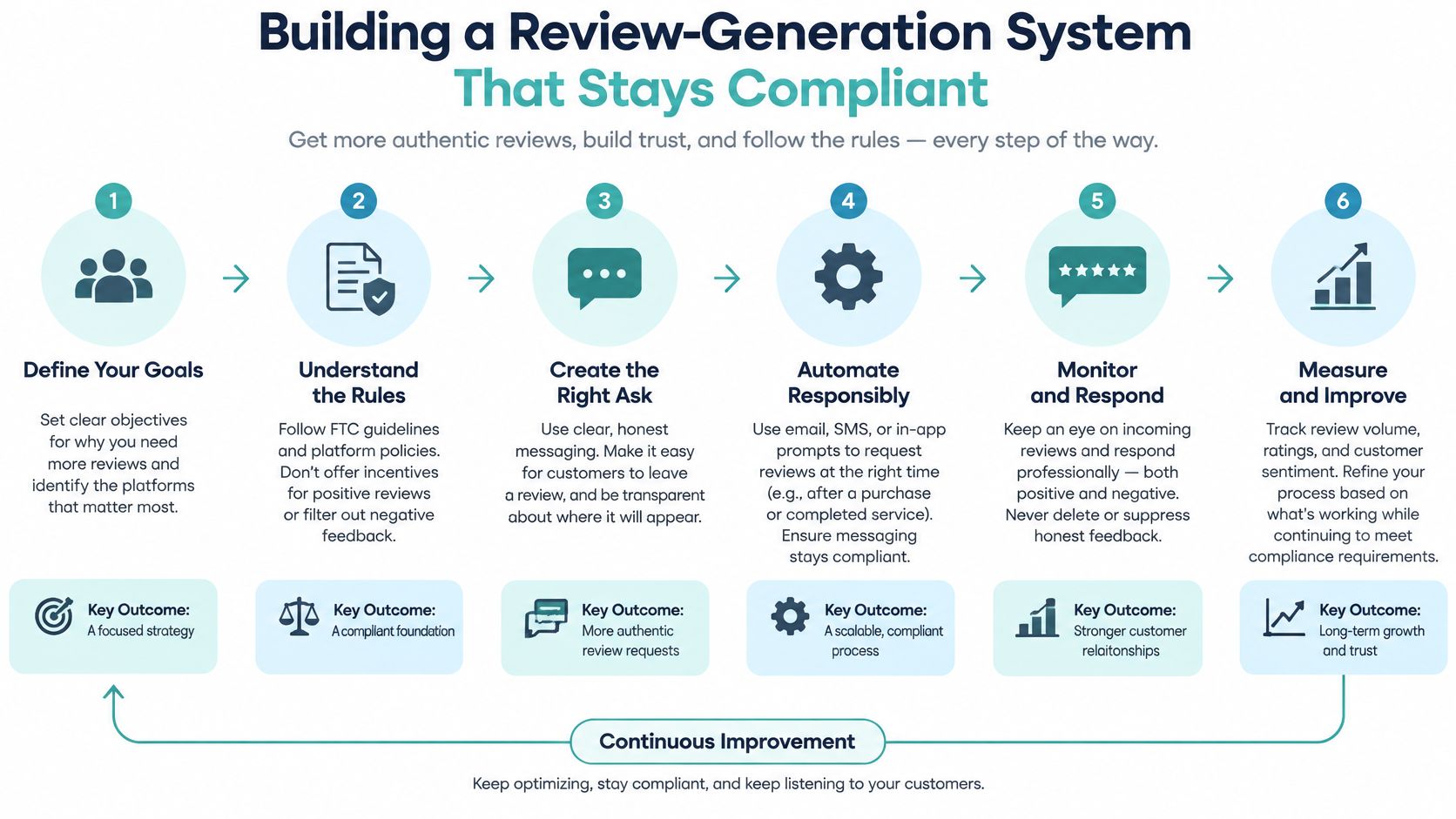
Compliance comes before scripts. The American Dental Association recommends monitoring major review sites whether you solicit reviews or not, and checking state dental board rules and state and local laws before soliciting, because some jurisdictions restrict the practice. Get that answer in writing for your state before you ask staff to do anything.
Once you've confirmed what's allowed, build the ask into the visit instead of relying on memory. Inconsistent requests are the main reason happy patients stay silent while unhappy patients self-select into public reviews. You're not filtering for praise. You're asking broadly and making it easy to respond.
Timing and Ownership
Ask when the experience is complete and the patient knows the outcome. For routine hygiene, that may be at checkout. For treatment involving soreness, laboratory work, or a follow-up, wait until you've checked in and answered questions so the request doesn't feel premature.
Assign one owner per visit type. The hygienist who built rapport may be the right person after a cleaning, while the front desk may be better after it has confirmed the next appointment and explained charges clearly. If everyone owns the ask, no one does.
Active Asks Versus Passive Prompts
An active ask is a direct, personal request with a simple next step. It works well, but it needs a script that doesn't pressure the patient or ask only if the visit went perfectly. A practical version is, we're trying to hear from more patients about their experience, would you be willing to share feedback online, I'll text you the link.
Passive prompts include a QR code at checkout, a link in a follow-up message, or a tablet prompt after payment. They create consistency with less staff effort, but they convert worse when no one mentions them. Most practices need both, with the passive channel catching patients the team missed.
Use the channel the patient already uses with you. Text works when you have permission and send a direct platform link. Email suits longer follow-up instructions. In-office prompts work only if the patient isn't rushed, uncomfortable, or trying to settle a balance.
Our guide to asking for reviews without making it awkward for staff or customers breaks down that wording in more detail. Adapt the language to dentistry and your state rules, then train everyone on the same version.
Don't put every review on Google. Google matters most for discovery, but a deliberate mix across Google, your website, and one or two healthcare directories gives you resilience if a platform filters reviews or changes its display. Rotate the destination intentionally by week or provider, and never offer incentives, gate unhappy patients away from public sites, or ask staff and family to pad the profile.
Finally, close the loop privately. Give patients an easy internal feedback route at the same time, such as a short post-visit survey or a named contact for concerns. That doesn't suppress criticism. It gives you a chance to fix a service problem while still inviting honest public feedback.
Responding to Negative Reviews Without Violating HIPAA
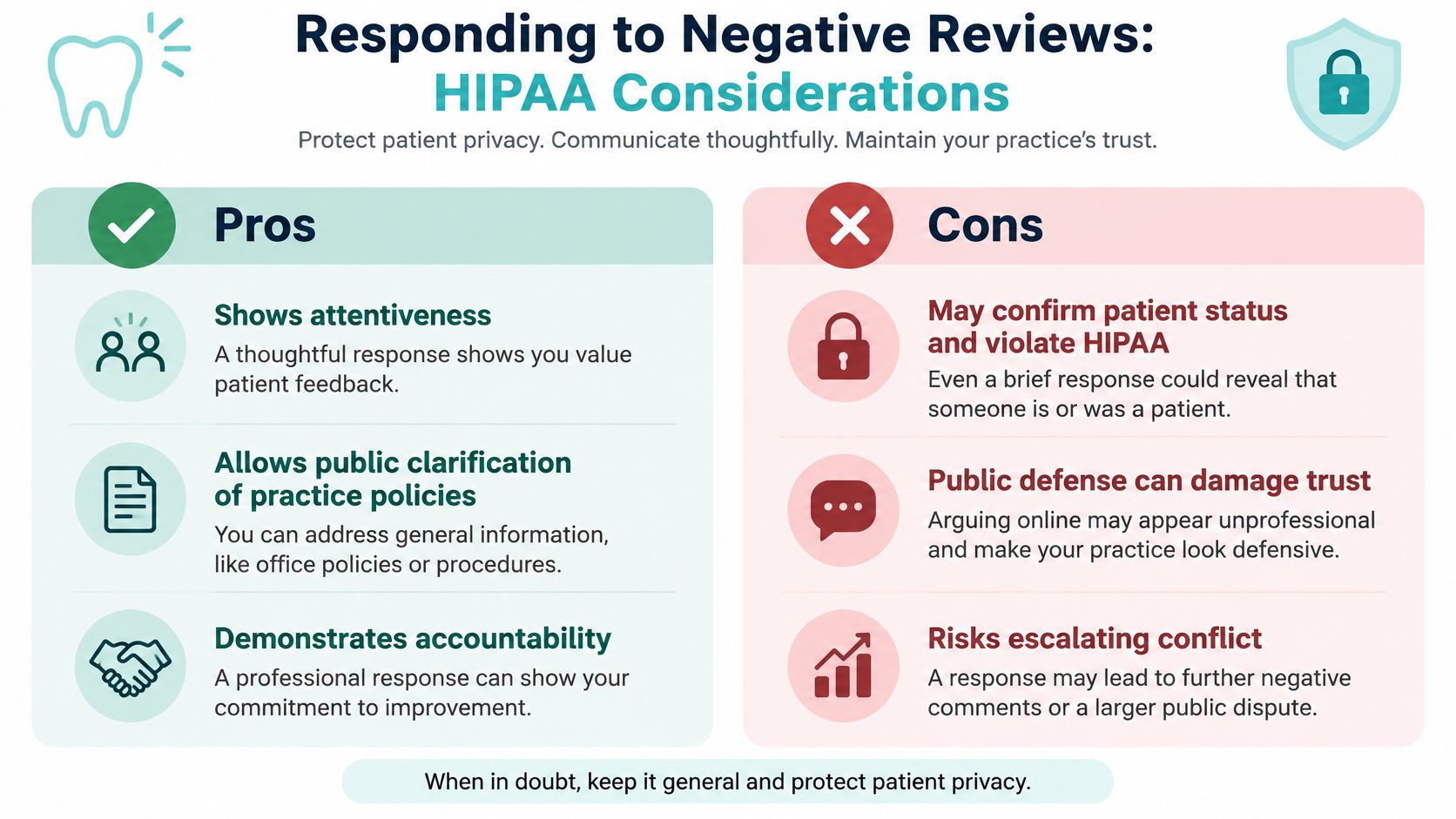
The urge to explain is understandable. You see a review that leaves out the missed appointment, the refused X-ray, or the estimate the patient signed. Correcting those details publicly can confirm the reviewer received care and disclose information you have no right to share.
That tension is common. The ADA reports 88% of surveyed dentists had received online reviews, but 39% said they were unable to respond because of HIPAA requirements, and it warns providers cannot acknowledge identifiable information even when patients disclose treatment details publicly. Silence isn't your only option. You can acknowledge a concern, state your general standard, and invite offline contact without confirming patient status.
The Privacy-Safe Structure
Every public reply follows the same skeleton. Thank the person for feedback, express concern in general terms, avoid names, dates, procedures, and any phrase such as during your visit, then provide a direct phone number for the office manager. Keep it short enough that there's nothing extra to leak.
Practical rule: If a stranger couldn't tell from your reply whether the reviewer was ever in your chair, you're on safer ground.
Don't copy details from the review back into your answer. That still signals recognition of a specific encounter. Describe your policy only in general terms, for example, we aim to explain fees before treatment and we welcome questions about any statement.
Scenario Frameworks
- Billing dispute: Say you understand unexpected charges are frustrating, your goal is to explain estimates and insurance limitations clearly, and you'd like the person to call so the team can review the concern privately. Don't mention balances, claims, procedures, or whether an estimate was signed.
- Long wait: Apologize generally for a frustrating experience, say punctual appointments matter to your office, and invite a call to discuss scheduling. Don't reference a specific day, emergency, or appointment time.
- Pain after treatment: Express concern and encourage anyone with urgent symptoms to contact the office or seek appropriate care, without confirming treatment or giving clinical advice publicly. Internally, escalate the same day because health and safety come before reputation.
- Alleged treatment error: Stay neutral, avoid disputing facts, and move the conversation offline immediately. The dentist and office manager should review the record privately, and your malpractice insurer or attorney may need notice depending on the allegation.
- Overtreatment accusation: State generally that recommendations should be explained with alternatives and that questions are welcome, then invite direct contact. Don't name a diagnosis, tooth, image, or proposed procedure.
Positive reviews need the same discipline. Thank the reviewer without confirming what treatment they received. A warm reply that repeats procedure details creates the same problem as a defensive one. The patterns in our guide to responding to a Google review in public without escalating the issue apply, with this stricter privacy filter on top.
Document and Escalate
Log every negative review internally with the platform, date, response date, theme, owner, and resolution status. If a private conversation is permitted and the person agrees to it, investigate the chart, schedule, ledger, and staff notes before you promise a fix. Route routine service issues to the office manager, clinical concerns to the dentist, threats or legal claims to your attorney and insurer, and matters involving licensing allegations with counsel's guidance.
Respond promptly, but not while you're angry and not before a second person checks the draft for identifiers. A boring, empathetic reply looks professional to future patients. A detailed rebuttal may win the argument with one reviewer and lose everyone else watching.
Optimizing Google Business Profile and Citation Consistency
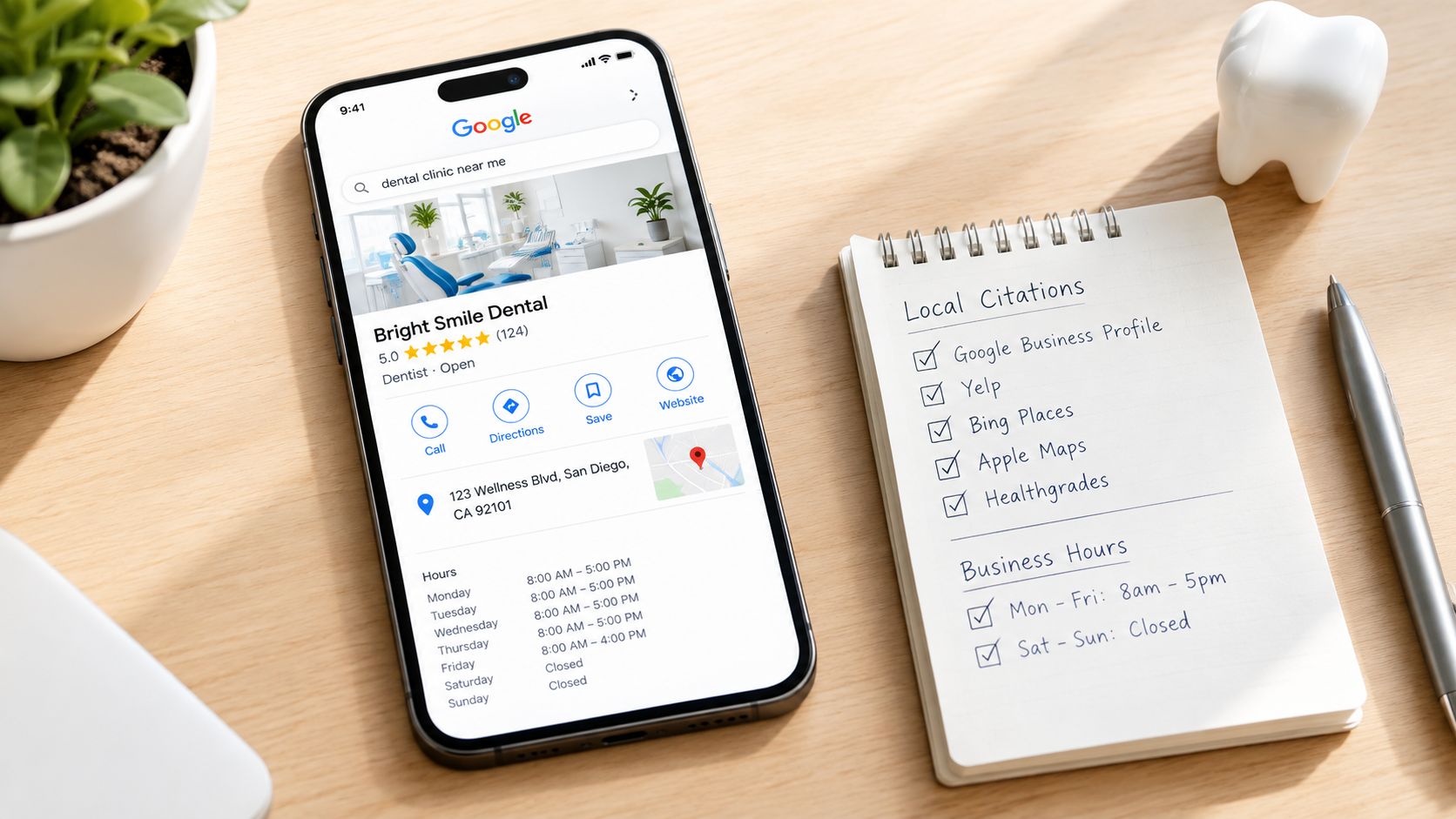
A strong review profile won't rescue a listing that sends patients to an old suite or shows Saturday hours you dropped last year. Your Google Business Profile is often the decision page. Patients compare rating, distance, hours, photos, and whether recent reviews sound current, then call without ever visiting your website.
Start with the fields that affect trust and contact. Use your real practice name without stuffing services or city names into it. Keep the address, main phone number, website, appointment link, and regular and holiday hours exact, and update them before a closure, not after patients complain.
Make the Profile Match the Practice You Run
Choose a primary category that matches your core practice and add supporting categories only for services you provide. List procedures using patient language as well as clinical terms, and remove services you've stopped offering or refer out. A bloated service list creates calls you can't serve and reviews that say you wasted someone's time.
Add current photos of the exterior, reception, operatories, and team, then replace images when the office or staff changes. Seed the Q&A section with real questions about parking, insurance verification, new-patient paperwork, and urgent pain, and answer new questions instead of letting strangers fill the gap. Someone searching emergency dentist near me is comparing who looks available and credible right now, which is exactly why hours, services, and recent responses need to be accurate before that search happens.
Use posts for genuine updates, such as a new doctor, changed hours, or a new service you've launched. Don't post generic dental tips just to look busy. Enable messaging or booking features only if a named employee monitors them during business hours, because an unanswered chat becomes another service complaint.
Clean Up Citations Beyond Google
Citations are listings of your name, address, and phone number across directories, insurers, maps, and healthcare sites. Claim the major ones, close duplicates, and align suite formatting, phone numbers, and website URLs with your Google profile. Check Apple Maps, Bing, Yelp, Healthgrades, Zocdoc, Facebook, and insurer directories in that cleanup.
Inconsistencies don't just look sloppy. They split reviews across duplicates, send calls to tracking numbers no one owns, and make it harder for search engines to connect signals to one practice. Our work on local SEO for doctors and medical practices follows the same consistency logic, adapted here for dental listings and provider profiles.
Assign citation checks to a recurring maintenance task whenever a provider joins, leaves, changes hours, or moves operatories. Reputation and local visibility reinforce each other. A current profile that answers reviews and lists accurate services gives patients more confidence than a slightly higher rating sitting on stale information.
Choosing Metrics That Actually Predict Practice Growth
Your star average is the easiest number to report and one of the weakest to manage. It moves slowly, hides location problems, and tells you nothing about why patients praised or criticized you. A practice can hold an attractive average while new reviews turn negative.
Track the signals patients use when deciding and the operational signals that show up before your rating drops. BrightLocal's 2025 Local Consumer Review Survey found 89% of consumers would use a business that responds to all reviews compared with 44% for one that does not respond, and 74% check at least two review platforms. Response coverage and cross-platform presence therefore belong on the same dashboard as rating.
A Monthly Scorecard Your Manager Can Maintain
Pull the same data on the same day each month by platform, provider, and location. Keep the definitions stable so trends mean something. Review the text themes with operations, not just the summary numbers with marketing.
| Metric | Why It Matters | How to Measure |
|---|---|---|
| Response rate | Shows prospective patients whether you listen to praise and complaints | Reviews with a privacy-safe reply divided by total new reviews |
| Median response time | Slow replies signal the same inattention patients fear in the office | Median hours or days from post date to reply date |
| Recency | Current reviews carry more credibility than an old cluster | Share of visible reviews posted in the recent period you track |
| Review velocity | Reveals whether your request system runs consistently | New reviews per month by platform and location |
| Sentiment themes | Turns anecdotes into fixable operational patterns | Count mentions of wait, billing, pain, staff, scheduling, and cleanliness |
| Source mix | Shows dependence on one platform and gaps elsewhere | Share of total reviews held by each platform |
| Complaint recurrence | Tests whether your fix actually removed the cause | Repeat theme count after the process change date |
Read the Leading Indicators
Wait-time mentions rising while the average rating stays flat is an early warning. The same is true for billing surprise, hard-to-reach phones, or rescheduling complaints at one location. Separate those themes by provider and office so a systemwide report doesn't hide a single broken schedule template.
For a single-location practice, one monthly page is enough if it drives one or two concrete fixes. A multi-location group needs side-by-side location views so managers can tell a local staffing issue from a policy problem affecting every office. Don't reward teams solely for stars, because that creates pressure to chase happy patients or avoid difficult conversations.
Pair reputation metrics with actions taken. Write the process change beside the month you made it, then watch whether that complaint theme declines. If it doesn't, your fix didn't address the cause, no matter how polished your replies became.
When to Outsource Reputation Management and How to Vet an Agency
A single-location practice with manageable review volume, one accountable office manager, and approved response language can usually run this in house. The work is routine once the audit, ask process, and complaint log exist. Outsourcing too early can create distance from feedback your team needs to hear directly.
The calculation changes when you operate several locations, reviews arrive across many platforms, no one owns replies consistently, or a wave of negative feedback needs coordinated service recovery. It also changes when the same person who's checking patients in is expected to audit citations, draft replies, analyze themes, and report trends.
What to Ask Before You Hire
- Healthcare and dental experience: Ask how the agency handles state dental board limits, advertising rules, and review solicitation in your jurisdiction.
- Privacy workflow: Require sample replies for billing, pain, and treatment-error scenarios and confirm a dentist or manager approves sensitive responses.
- Ownership of assets: Make sure you own your listings, data, complaint log, and templates if the relationship ends.
- Reporting: Insist on response rate, recency, sentiment themes, source mix, and recurrence, not only star average and total count.
- Scope boundaries: Put in writing who monitors after hours, who contacts unhappy patients privately, and who fixes the operational cause.
Capacity doesn't have to mean a full agency. Some practices keep clinical judgment and final approval in house while using Medical Virtual Assistants for monitoring, logging, and other administrative support. That model works only with strict privacy training, limited system access, and clear escalation rules.
Walk away from anyone who guarantees a rating, promises to remove legitimate criticism, creates reviews, gates feedback, or wants to post replies without your review. Those tactics put your license and credibility at risk long after the vendor is gone.
The safest arrangement keeps the practice accountable for patient experience and final clinical decisions. Outside help should make monitoring and follow-through more reliable, not hide what patients are telling you.
If your reviews keep pointing to the same scheduling, billing, or website problems, Digital Skyrocket can rebuild the site, local SEO, and reputation workflow as one lead-generating system for your dental practice. Visit Digital Skyrocket to start with a fit meeting and an evidence-based look at what's helping or hurting your visibility.