

Both reviews and SEO feed into each other in ways that aren't always obvious. When real customers leave honest feedback on a regular basis, that activity sends signals to search engines and builds trust with potential clients before they ever click through to your site. Here's how that relationship actually plays out.
Table of Contents
- How Reviews Influence Local Search Rankings
- Look Beyond Star Ratings
- Separate Vanity Metrics From Useful Signals
- Build Signals Without Manipulation
- Choose Platforms Based on Customer Behavior
- Maintain a Consistent Presence Across Platforms
- Create a Consistent Request Workflow
- Respond for Trust and Context
- Picking the Right Markup
- Testing Before You Hit Publish
- Establish a Reliable Baseline
- Connect Reviews With Search Behavior
How Reviews Influence Local Search Rankings
Think about how Google sorts through local results. It weighs three things above everything else: whether the business matches the search, how close it is, and how prominent or well-regarded it appears. Reviews feed most directly into that prominence factor, but they also tell search engines what a business does and who it serves through the specific language customers use.
A healthy review profile is more than a star rating. It works like a continually updated recommendation signal—one that changes and grows over time.
Consider this: a business sitting on 300 reviews with nothing new in six months looks stagnant compared to a competitor getting genuine feedback every week. Volume matters, as does a high rating, but the conversation happening around your business tells the fuller story. Review volume, detail, and how you respond all add context that algorithms and people pick up on.
Reviews work like a public trail of evidence. The trail is strongest when it's recent, consistent, specific, and authentic.
A few metrics tend to drive most of the impact:
- Review velocity: A steady stream of new feedback signals that a business is actively serving customers.
- Recency: Fresh comments reassure both search engines and potential clients that you're still in business and doing good work.
- Volume: More genuine reviews create a broader base of trust than a handful of ratings scattered across platforms.
- Sentiment: When reviewers describe positive experiences in their own words, that naturally encourages clicks.
- Relevance: Mentions of specific services, neighborhoods, and use cases help search engines understand what you do and where you operate.
None of this works like a checkbox. If you coach customers to stuff keywords into their reviews, you'll end up with stiff, unnatural language that people see right through, and some platforms will flag it anyway. A better approach: ask for honest feedback after you've completed a meaningful interaction, then respond thoughtfully and with specifics.
Here's how the main review metrics connect to what you actually see in search and user behavior:
| Review Metric | SEO and Visibility Effect |
|---|---|
| Recent reviews | Signals active business and boosts buyer confidence |
| Consistent review flow | Builds a healthier freshness pattern over time |
| High review volume | Strengthens prominence signals and reduces hesitation |
| Positive sentiment | Can lift click-through rates and conversion confidence |
| Detailed service mentions | Adds relevance context that helps search engines categorize you |
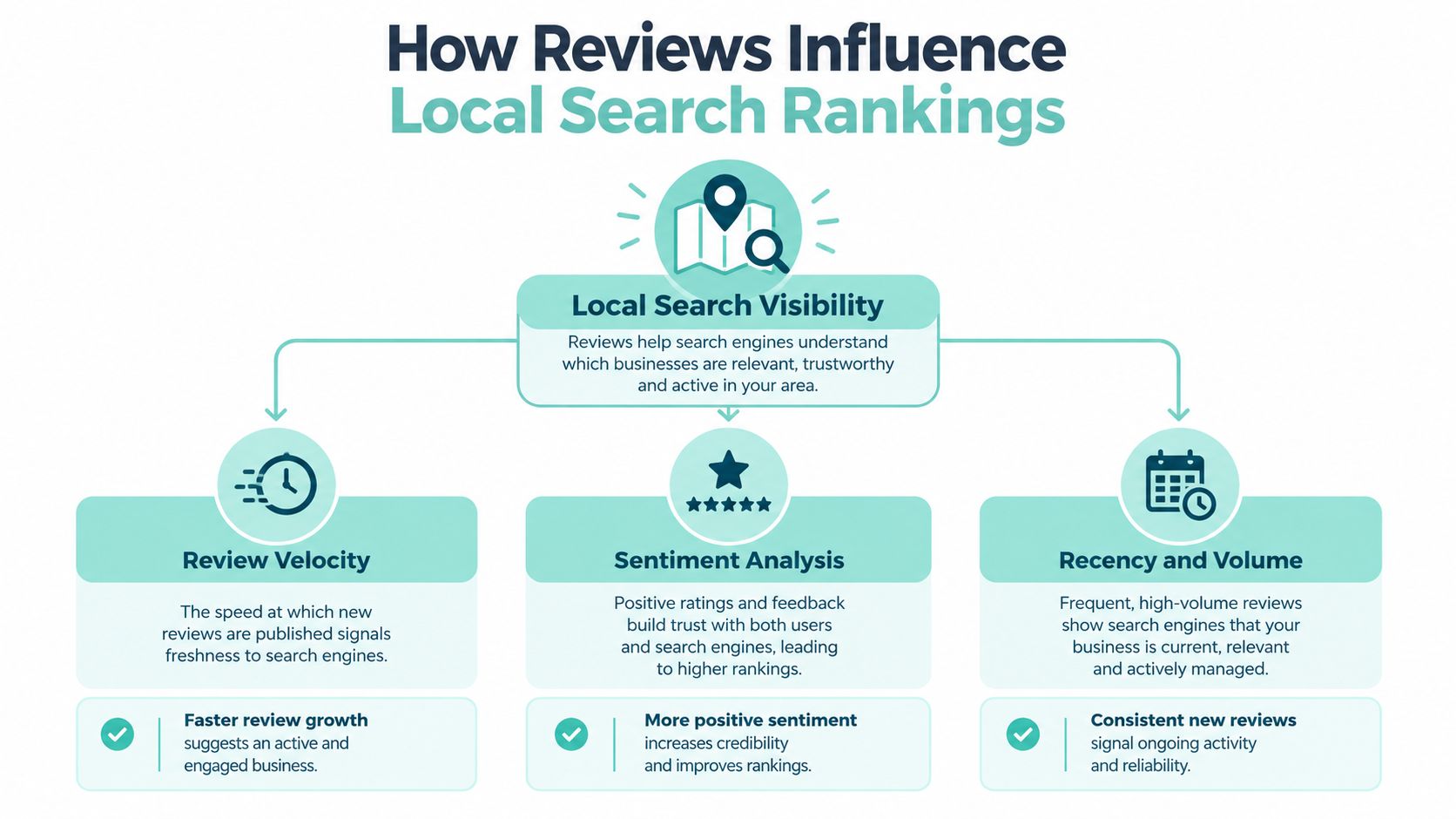
The visualization above shows how velocity, sentiment, recency, and volume work together to support local search visibility rather than acting as isolated ranking switches.
If you're building out a reputation management workflow, this guide to reputation management best practices walks through the process step by step. For a concrete example of how this plays out in a service-based industry, check out this breakdown of online visibility for doulas and see how local discovery connects directly to client acquisition.
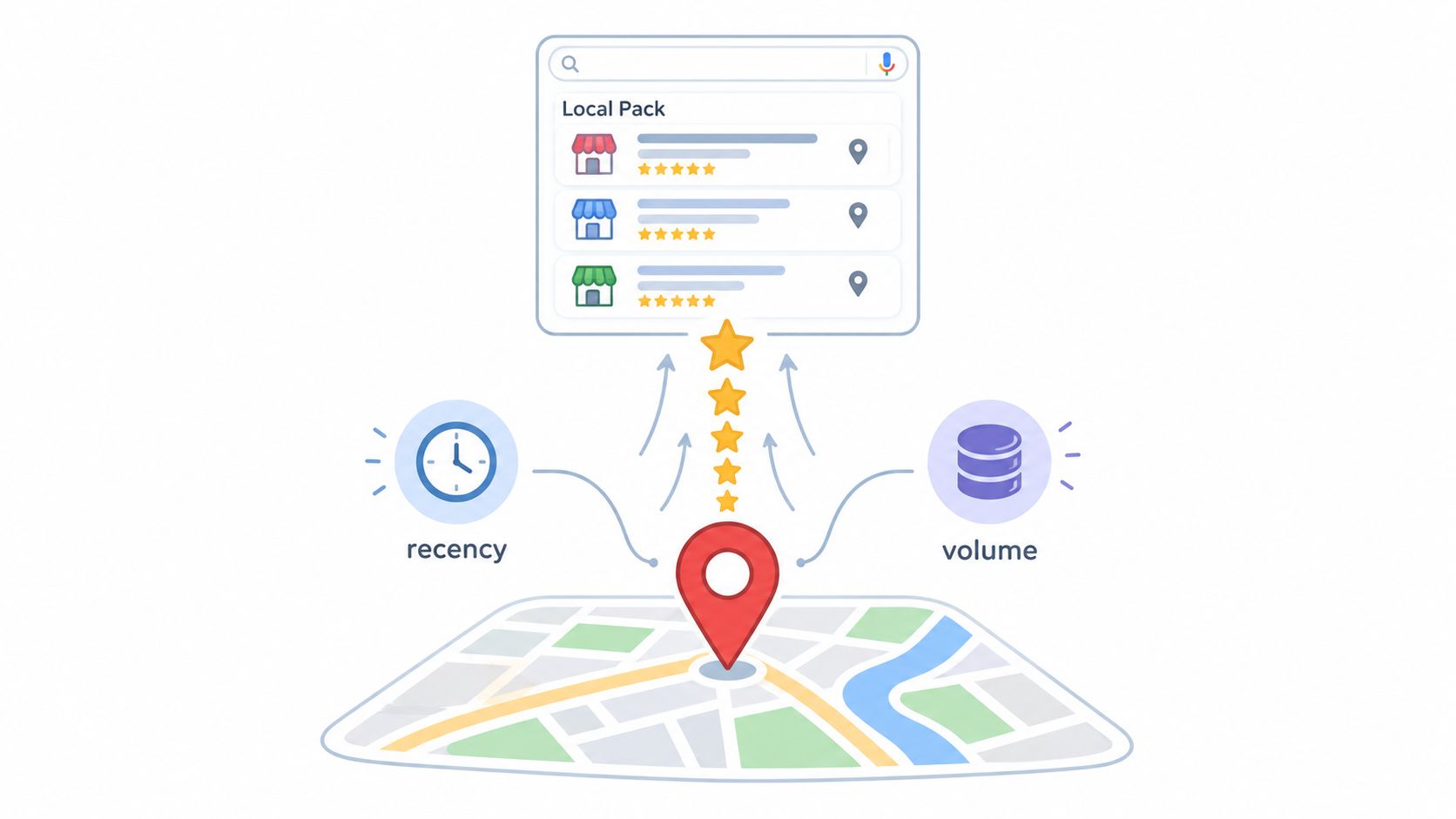
A star rating is only the visible surface of reviews and SEO. Search systems dig deeper, examining patterns in the feedback itself — much like a person who reads several recommendations about a business rather than glancing at one number.
Look Beyond Star Ratings
Review velocity tells you how consistently customers share their experiences. A steady trickle suggests an active, engaged business, while a sudden burst followed by months of silence tells a different story. Recency plays a similar role. A profile updated this week feels far more trustworthy than one that hasn't changed in a year.
Review diversity adds another dimension entirely. Customers mention different services, different locations, specific staff members, and problems solved in unexpected ways. Those natural variations help search engines connect a business with more specific searches — without anyone stuffing keywords into a response.
The strongest review signal isn't a polished script. It's a steady, authentic record of real customer experiences over time.
Separate Vanity Metrics From Useful Signals
A large review count looks great on a dashboard, but it rarely explains why visibility actually shifts. Compare the numbers against the context surrounding them:
- Volume gives you breadth, but only when reviews are genuine and relevant to what you actually offer.
- Velocity signals ongoing customer activity over weeks and months.
- Recency reassures searchers that the current state of service is represented, not some snapshot from three years ago.
- Sentiment influences trust, click-through behavior, and whether prospects keep researching or move on.
- Specific language clarifies your services and the real customer needs you address.
Think about it this way. "Great company" offers almost nothing useful. But "The roofer repaired a storm-damaged shingle roof in Tyler and explained each step of the process" gives readers actual evidence and reinforces topical context in a completely organic way.
Build Signals Without Manipulation
The goal here isn't to script what customers write. Ask for honest feedback after a completed service, make the request effortless, and encourage people to describe their actual experience. Never offer incentives for positive reviews, and never pressure anyone to drop target phrases into their feedback.
Your responses to reviews also add visible context. Thank customers specifically, address concerns without getting defensive, and reference the service discussed without repeating keywords in a mechanical way. Before diving into tactics, learn more about Google Maps ranking factors to see how reviews fit alongside relevance, distance, and prominence in the bigger picture.
A practical review audit should track:
- New reviews by month — not just the lifetime total.
- Average rating alongside recurring praise or complaints.
- Services and locations customers mention naturally in their own words.
- Response rate and how quickly you're responding.
- Local Pack impressions, profile actions, and organic clicks.
These measures tell you whether your reputation activity actually supports discovery and engagement. Actionable signals describe real customer behavior and business relevance. Vanity metrics look impressive in a report and nothing more. That distinction is what separates businesses that see results from review activity from those that simply accumulate stars.
Google Business Profile usually hogs the spotlight, but reviews and SEO work across a whole ecosystem of platforms. Picture each profile as a signpost pointing toward your business on the internet. Google might be the four-lane highway everyone's on, but Yelp, Tripadvisor, legal directories, and home-service sites all serve as confirmation that your business is real, relevant, and actively operating.
That broader footprint builds brand authority and entity validation. When your business details, service descriptions, and genuine customer experiences stay consistent across multiple touchpoints, search engines get stronger signals connecting your name to the actual work you do.
Choose Platforms Based on Customer Behavior
Don't just copy whatever directories your competitors are listed on. Start by figuring out how people actually find services like yours. A law firm probably needs jurisdiction-specific legal directories to show up where it matters. A roofer, on the other hand, will get far more traction from home-service aggregators and local trade platforms.
Here's a practical way to split your effort:
- Primary platform: Keep your Google Business Profile current with accurate details, fresh photos, updated services, and active review management.
- Industry platform: Double down on the site customers turn to when comparing providers in your specific field.
- Discovery platform: Make sure your branded and "best near me" searches pull up accurate, complete profiles on the right directories.
- Travel or care platform: Lean into Tripadvisor for hospitality and attractions, or specialized communities for pet care and similar personal services.
A pet sitter is a perfect example here. Spreading effort across every directory available makes less sense than building a solid presence on platforms where pet owners already look for trusted sitters. This trusted pet sitter reviews guide dives into why reputation feedback matters so much for pet sitters and the owners who rely on them.
The best review platform isn't the one with the biggest audience. It's the one your next customer already trusts.
Maintain a Consistent Presence Across Platforms
Secondary profiles won't replace your Google visibility, but they do several things well. They strengthen what shows up for branded searches, send referral visitors your way, and give search engines and answer engines corroborating data. They also hand prospects another place to verify your reputation before they ever pick up the phone.
Keep these core elements aligned everywhere:
- Use the identical business name, address, phone number, and website URL.
- Describe your services using the natural language your customers would use.
- Respond to feedback on platforms that actually influence buying decisions in your industry.
- Audit your listings every quarter for outdated hours, duplicate profiles, or missing categories.
Track impressions, profile visits, referral clicks, phone calls, and branded searches by platform. Then put your energy where customer activity and qualified leads overlap rather than spreading yourself thin across every directory you can find.
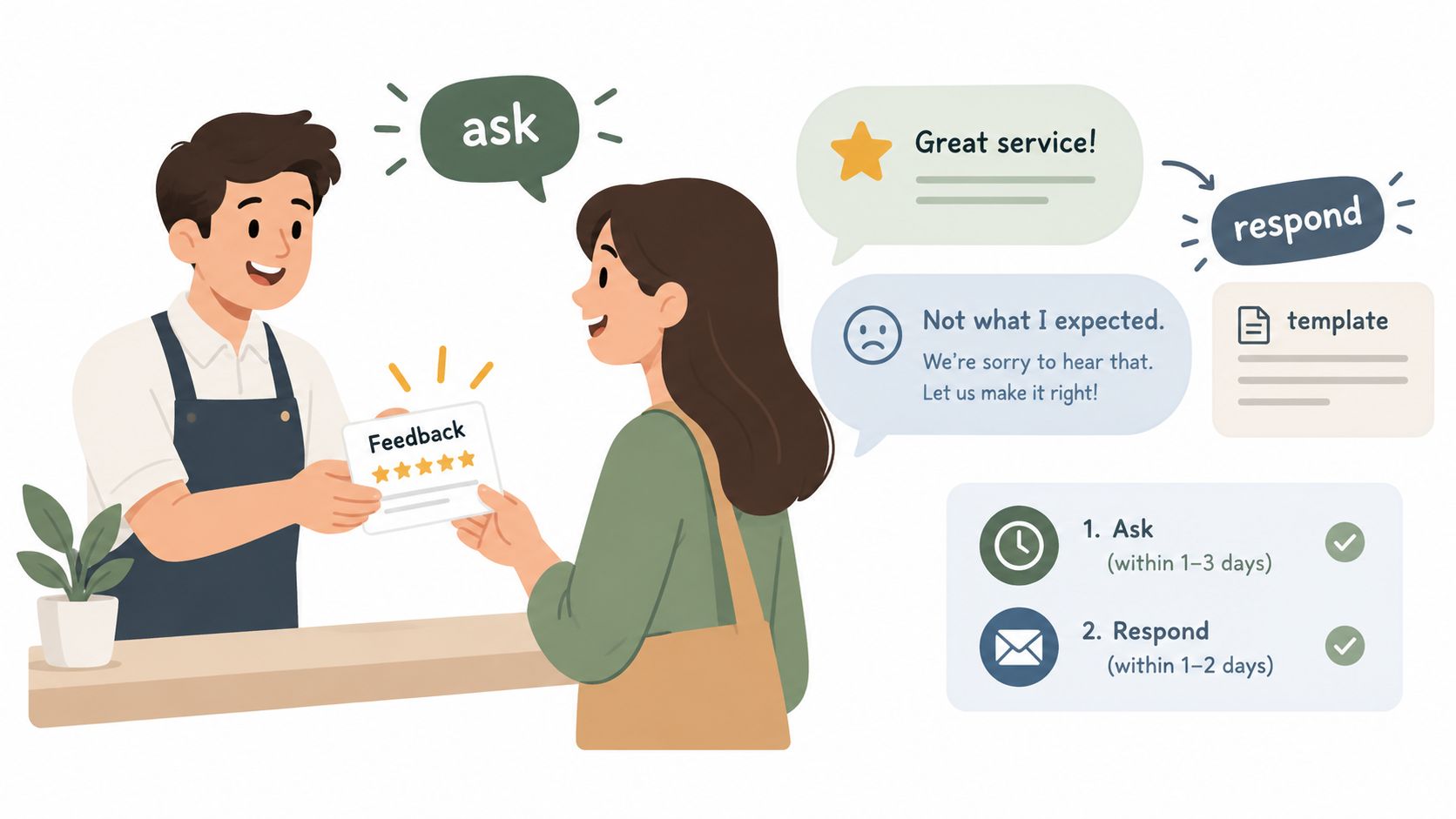
A strong reviews and SEO process starts with timing, not scripts. Ask shortly after a completed service, when the customer has experienced the result and can describe it clearly. For a roofer, that might be after the final walkthrough. For a law firm, it could follow a meaningful case update, while respecting privacy and professional rules.
Make the request easy and neutral. Send one direct link through the channel the customer already uses, such as email, SMS, or a follow-up message. Ask for an honest account, never a positive rating, and never provide rewards in exchange for feedback.
Request the experience, not the wording. Authentic details help future customers and create more useful relevance signals than manufactured keywords.
Create a Consistent Request Workflow
Use a simple sequence that staff can repeat without pressuring anyone:
- Confirm the service is complete and the customer is reasonably satisfied.
- Ask permission to send a feedback link.
- Send the request within a day or two.
- Provide one primary review destination, avoiding platform confusion.
- Record the request and follow up once, politely.
A message might read:
"Thank you for choosing us for your roof repair. If you have a moment, would you share an honest review about your experience? Your feedback helps us improve and helps other local homeowners choose a contractor."
This wording invites specific context without telling customers what to say. It also avoids review gating, where unhappy customers are diverted away from public platforms.
Respond for Trust and Context
Responses serve two audiences, the reviewer and the next prospect reading the profile. Thank positive reviewers specifically, mention the service naturally, and avoid repeating the same phrase in every reply.
For example: "Thank you, Maria. We're glad the emergency HVAC repair restored comfort quickly, and we appreciate you mentioning our technician's clear explanation."
Negative reviews require calm, not a public argument. A useful response should:
- Acknowledge the concern without admitting facts you cannot verify.
- Apologize for the customer's experience where appropriate.
- Explain the next private step, such as contacting a manager.
- Protect confidential information, especially for legal and healthcare businesses.
- Avoid naming employees, case details, or disputed allegations.
Try: "We're sorry the scheduling experience fell short. We'd like to review what happened and find a suitable resolution. Please contact our office directly so we can discuss this privately."
Finally, review performance monthly. Compare new review volume, response time, profile actions, branded searches, and qualified calls against your baseline. Use reputation management best practices to support a repeatable process, then connect the findings to website updates and local SEO decisions. When review activity and inquiries rise together, reputation work is contributing to measurable growth, not merely producing more stars.
Review schema helps search engines understand the data on your site, but it does so in a very literal way. Think of it as a filing system with labels: it separates your business name, overall rating, and customer commentary so crawlers know exactly what each piece means.
Picking the Right Markup
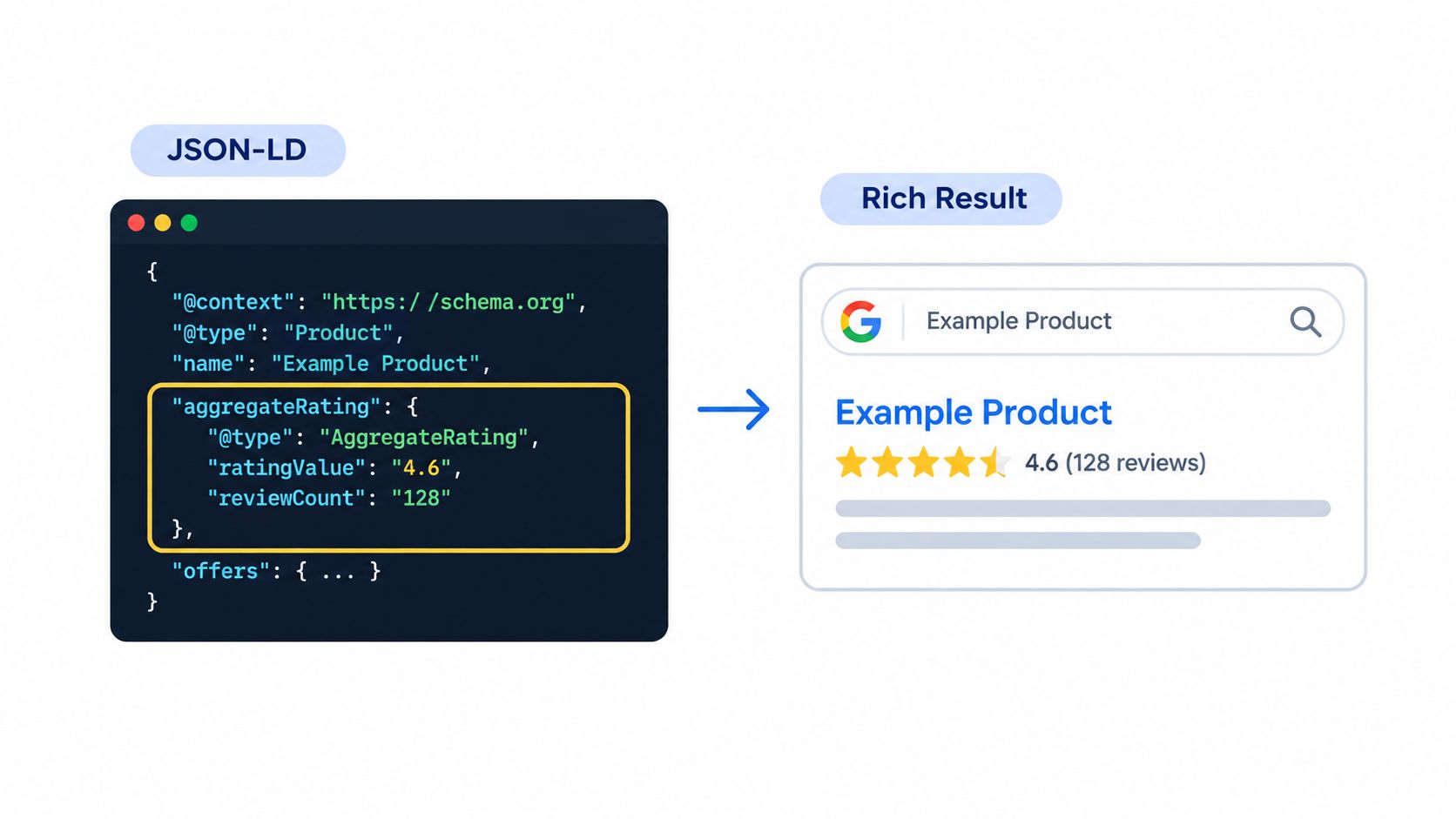
You'll typically work with two types of schema. AggregateRating summarizes a collection of reviews — say, a 4.8 average across 126 reviews. A single Review schema, on the other hand, describes one person's experience, including their name, the rating they gave, the text of their review, and when they posted it.
Service businesses often use both. Just remember: every piece of markup needs to correspond to content that real visitors can actually see on the page.
A solid structure usually looks like this:
LocalBusinessfor your company and what you offer.aggregateRatingfor the visible overall score and review count.reviewfor individual, genuine customer feedback displayed on the page.author,reviewRating, andreviewBodyfilled in for each review.
Here's a trap to avoid: don't copy ratings from Google Business Profile onto your site and present them as if they came directly from customers on your own pages. Google's guidelines are clear — the markup should only reflect reviews available on the page it's added to. And even when everything is done correctly, there's no guarantee stars will show up in search results.
Testing Before You Hit Publish
Start with one page, typically a location or service page where the business info and reviews are clearly visible. Add your JSON-LD through your CMS, then double-check that the rating, review count, author names, and review text match exactly what appears on the rendered page.
Run the URL through Google's Rich Results Test and look at any warnings or errors. Follow up with the Schema Markup Validator to check the vocabulary structure too, because passing one tool doesn't mean you'll get the green light in search.
Watch out for these common mistakes:
- Marking up reviews that are hidden or only appear after clicking something.
- Displaying a rating that doesn't match the actual visible review total.
- Using vague or incomplete author names.
- Adding review properties to a page that doesn't clearly identify the business being reviewed.
- Publishing duplicate schema blocks with conflicting ratings.
If you want to dig deeper into the technical side, check out this guide on local business schema markup.
Schema can clarify your reviews, but it cannot manufacture trust. Keep the underlying feedback authentic, visible, current, and consistent.
Once you're live, keep an eye on enhancements and click-through rate in Google Search Console. A page might hold the same position in results but pull in significantly more visits simply because review stars make it stand out. Revisit your markup after any redesign, template change, or rating update — and when reviews get taken down, remove the corresponding structured data instead of letting it drift out of sync with what customers see.
Reviews and SEO become a lot easier to justify when you can tie reputation activity directly to business results. Think of your reporting dashboard as a trail map — it starts with review activity and leads all the way to qualified calls, form submissions, and booked consultations.
Establish a Reliable Baseline
Before you change anything about your review process, record performance for at least one full period. You need something to measure against. Capture:
- Local Pack impressions and actions from your business profile
- Branded search volume and clicks from Search Console
- Organic sessions on pages that display review content
- Calls, email clicks, form submissions, and booked appointments
- Review count, average rating, new reviews, and response time
Then compare matching periods — this month versus last month, or this quarter versus the same quarter a year ago. Seasonal demand plays a role here, so resist the temptation to credit every uptick solely to reviews. That kind of claim falls apart fast under scrutiny.
A review program earns real credibility when it connects reputation signals to qualified inquiries — not when it reports star totals in isolation.
Connect Reviews With Search Behavior
Set up separate dashboard views for branded and non-branded traffic. Branded searches often reveal growing trust after customers encounter your profile, while non-branded queries tell you whether broader local visibility is actually improving.
Take a Dallas HVAC company as an example. They can compare review activity against searches containing their name, service-page clicks, profile calls, and completed quote forms. Tag referral links wherever you can, and note whether each lead came through organic search, a profile action, or a review-rich page.
A simple monthly workflow keeps this manageable:
- Export review and profile data
- Compare impressions, clicks, calls, and conversions against your baseline
- Flag any major rating shifts, service launches, or listing updates
- Check whether conversion rate moved alongside traffic quality
- Summarize results and next steps in plain language
Review-rich pages often pull in more clicks even when rankings hold steady. But measure conversion lift, not assumptions. Compare visitors who saw review content with similar organic visitors who didn't — just keep in mind this is directional, not perfect attribution.
Digital Skyrocket can combine reputation reporting with local SEO, website analytics, and conversion improvements for service companies.
Digital Skyrocket can help connect your reviews and SEO activity to qualified leads. Discuss your search growth opportunities.